Dancing on Graves?
I trust that it all happened exactly as it should. Don’t we all believe God is in control?
Friends and family are asking me why I have been silent about the raid, capture and execution of Osama Bin Laden.
9/11 and the celebrations televised around the world were equally horrifying to me. Pointless killing. Pointless celebration.
We don’t celebrate the deaths, not even of those who have caused us harm. It’s not who we are, and it only invites retribution, and keeps the pointless violence, the pointless arguments going.
Jesus told us that it is easy to pray for our friends and family, but that we are to pray for our enemies as well. It’s really really hard. And it is one of the few gates that will open the door to true change, which has to come from the heart.
There is no guarantee that an operation will succeed, no matter how talented, trained and intelligent the operators are. Well done, Navy SEALS. Well done, those who gathered the information, who confirmed the information, and who chose to execute surgically, rather than a bomb which would kill without positive identification. Well done, gathering all the computers and flash drives, hopefully full of information which will give insight into future plans which can be thwarted.
Osama’s death doesn’t bring back the thousands killed in the 9/11 attacks. It does send a message that attackers will be hounded until they pay for their actions. That’s not a pass for dancing; it’s a grim tally in the world of hard-ball politics.
Your Words Make all the Difference
Thank you, Kimberly, for sending me this great message:
Scamese
This was in my newest New Yorker magazine, originally given me by Little Diamond, now I can’t live without my subscription. 🙂 There is the kind of news you get on television, like what they have pictures of, maybe not the most important stuff but visual. Then there is National Public Radio news, and the New York Times, and The New Yorker. The New Yorker also has some of the greatest, funniest covers ever, and great cartoons. This one, as you might imagine, is near and dear to my heart:

Two Saints of the Church
Here is the prayer given for today in the Lectionary:
PRAYER (traditional language)
Loving God, we offer thanks for the ministries of Edward Thomas Demby and Henry Beard Delany, bishops of thy Church who, though limited by segregation, served faithfully to thy honor and glory. Assist us, we pray, to break through the limitations of our own time, that we may minister in obedience to Jesus Christ; who with thee and the Holy Spirit livest and reignest, one God, now and for ever. Amen.
BISHOPS, 1928, 1957
Delany, Henry Beard [Feb. 5, 1858-April 14, 1928] was the second African American bishop in the Episcopal Church, being elected Suffragan Bishop of North Carolina in 1918. He is probably better known as the father of Sadie and Bessy Delany, authors of the popular book, Having Our Say, which chronicled their lives.
Edward Thomas Demby [Feb. 13, 1869-Oct. 14, 1957] was the first African American bishop in the Episcopal Church. He served his first parish in Mason, Tenn. He became “Suffragan Bishop for Colored Work in Arkansas and the Province of the Southwest” in 1918. His career has been covered in a book, Black Bishop.
As we begin to transition from the Lenten season to the great feast of Easter, my heart takes hope from the courage of those who stood in the face of prejudice and exclusion, and focused on doing their jobs and doing them with grace. I think of how hate blinds us. I think of how Catholics and Protestants slaughtered one another, how Mormons were driven West, how Sunnis and Shiites are clashing in Iraq, how Christians and Moslems are battling to the death, and when I am near to losing hope, I try to focus on how earlier conflicts have almost totally disappeared. We are all believers. We believe in the one true God. We squabble like children over his inheritance.
US Highway Deaths Lowest Since 1949
The major reason? 84% US drivers use seat belts. You can read the entire article at AOL News
WASHINGTON — Highway deaths have plummeted to their lowest levels in more than 60 years, helped by more people wearing seat belts, better safety equipment in cars and efforts to curb drunken driving.
The Transportation Department estimated Friday that 32,788 people were killed on U.S. roads in 2010, a decrease of about 3 percent from 2009. It’s the fewest number of deaths since 1949 — during the presidency of Harry Truman — when more than 30,000 people were killed.
The Pacific Northwest region, which includes Washington state, Oregon, Idaho, Montana and Alaska, saw fatalities fall 12 percent. Western states including Arizona, California and Hawaii also posted large declines.
Government officials said the number of deaths was still significant but credited efforts on multiple fronts to make roadways safer.
“Too many of our friends and neighbors are killed in preventable roadway tragedies every day,” said Transportation Secretary Ray LaHood. “We will continue doing everything possible to make cars safer, increase seat belt use, put a stop to drunk driving and distracted driving and encourage drivers to put safety first.”
Cutting for Stone by Abraham Verghese

Someone in my book club in Qatar mentioned this book, Cutting for Stone, a while back, and I bought it, but it has sat for months on my to-read shelf (LOL, there are actually several, but one with the most important books, and another with the ‘guilty pleasures,’ the ones I am addicted to and save as a reward for good behavior, like vacuuming.)
When a good friend said she was reading it, and that it was good, I decided to move it up in priority, sort of like taking medicine, read a book that is good for you.
Oh WOW.
First, it is a great, absorbing story. Twin boys are born, totally unexpected, to an Indian Catholic nun and an English surgeon, working in Addis Ababa. How they were conceived is a mystery. The mother dies in childbirth, the father flees in horror, the children are born conjoined at the head and must be separated. The boys are adopted by an Indian couple, doctors at the hospital, and are raised with love and happiness.
That’s just the beginning!
I’ve always wanted to go to Ethiopia and Eritrea. I want to visit Lalibela, and some of the oldest Christian churches in the world. When my father was sick, he had a home health aid from Ethiopia, Esaiahs, who told me about the customs in his church, and how Ethiopian Christianity is very close to Judaism, with men and women separated in the church, and eating pork forbidden.
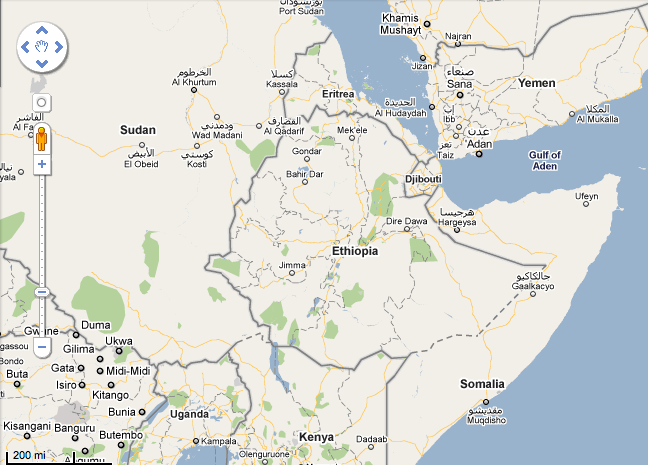
Reading this book, I felt like I had lived there, and I want to go back. The author captures the feelings, the smells, the visuals, the sounds, and if I awoke in a bungalow at the MIssing (Mission) Hospital, I would say “Ah yes! I remember this!”
I kept marking sections of this book that I loved. Here is one:
They parked at Ghosh’s bungalow and walked to the rear or Missing, where the bottlebrush was so laden with flowers that it looked as if it had caught fire. The property edge was marked by the acacias, their flat tops forming a jagged line against the sky. Missing’s far west corner was a promontory looking over a vast valley. That acreage as far as the eye could see belonged to a ras – a duke – who was relative of His Majesty, Haile Selassie.
A brook, hidden by boulders, burbled; sheep grazed under the eye of a boy who sat polishing his teeth with a twig, his staff near by. He squinted at Matron and Ghosh and then waved. Just like in the days of David, he carried a slingshot. It was a goatherd like him, centuries before, who had noticed how frisky his animals became after chewing a particuar red berry. From that serendipitous discovery, the coffee habit and trade spread to Yemen, Amsterdam, the Caribbean, South America, and the world, but it had all begun in Ethiopia, in a field like this.
We live inside the hearts and minds of doctors, some practicing under the worst possible conditions, and learn how they make their decisions and why. Verghese is a compassionate author; while his characters may be flawed, they are forgivable and forgiven.
Another section I loved, the man speaking is Ghosh, the man who adopted the twins with Hema, another doctor:
“My genius was to know long ago that money alone wouldn’t make me happy. Or maybe that’s my excuse for not leaving you a huge fortune! I certainly could have made more money if that had been my goal. But one thing I won’t have is regrets. My VIP patients often regret so many things on their deathbeds. They regret the bitterness they’ll leave in people’s hearts. They realize that no money, no church service, no eulogy, no funeral procession no matter how elaborate, can remove the legacy of a mean spirit.”
Things in Ethiopia get sticky, politically, and one of the twins is forced to flee, implicated in an airplane hijacking only because he was raised with a young woman involved. He is spirited into Eritrea, where he awaits his ride out to Kenya, and he helps the Eritrean rebels when large numbers of wounded are brought into his area. When the time comes to leave, his thoughts will strike a chord in anyone who has ever been an expat:
Two days later I took leave of Solomon. There were dark rings under his eyes and he looked ready to fall over. There was no questioning his purpose or dedication. Solomon said “Go and good luck to you. This isn’t your fight. I’d go if I were in your shoes. Tell the world about us.”
This isn’t your fight. I thought about that as I trekked to the border with two escorts. What did Solomon mean? Did he see me as being on the Ethiopian side, on the side of the occupiers? No, I think he saw me as an expatriate, someone without a stake in this war. Despite being born in the same compound as Genet, despite speaking Amharic like a native, and going to medical school with him, to Solomon I was a ferengi – a foreigner. Perhaps he was right, even though I was loath to admit it. If I were a patriotic Ethiopian, would I not have gone underground and joined the royalists, or others who were trying to topple Sergeant Mengistu? If I cared about my country, shouldn’t I have been willing to die for it?
The book has a lot of observations about coming to America; some of which made me laugh, some which made me groan. Coming back is always a shock to people who have lived abroad for a time, but it is a huge shock to those coming for the first time:
The black suited drivers led their passengers to sleek black cars, but myman led me to a big yellow taxi. In no time we were driving out of Kennedy Airport, heading to the Bronx. We merged at what I thought was a dangerous speed onto a freeway and into the slipstream of racing vehicles. “Marion, jet travel has damaged your eardrums,” I said to myself, because the silence was unreal. In Africa, cars ran not on petrol but on the squawk and blare of their horns. Not so here; the cars were near silent, like a school of fish. All I heard was the whish of rubber on concrete or asphalt.
As I neared the end, I read more slowly, unwilling for this book to end. It is one of the most vivid and moving books I have ever read. AdventureMan has gone online to find the nearest Ethiopian restaurant so we can have some injera and wot.
Oral Sex Linked to Rise in Throat Cancers
You can read this report on NPR News/Health
Virus Passed During Oral Sex Tops Tobacco As Throat Cancer Cause
by PEGGY GIRSHMAN
If you’re keeping score, here’s even more evidence that HPV causes oral, head and neck cancers and that vaccines may be able to prevent it.
Researchers studying the human papillomavirus say that in the United States HPV causes 64 percent of oropharynxl cancers. In the rest of the world, tobacco remains the leading cause of oral cancer, Dr. Maura Gillison of Ohio State University told a meeting of the American Association for the Advancement of Science this past weekend.
And the more oral sex someone has had — and the more partners they’ve had — the greater their risk of getting these cancers, which grow in the middle part of the throat. “An individual who has six or more lifetime partners — on whom they’ve performed oral sex – has an eightfold increase in risk compared to someone who has never performed oral sex,” she said.
The recent rise in oropharnx cancer is predominantly among young, white men, she noted, though she says no one has figured out why yet. About 37,000 people in the United States were diagnosed with oral cancer in 2010, according to the Oral Cancer Foundation.
People with HPV-related throat cancer are more likely to survive their cancer than those who were heavy smokers or drinkers, the other big risk factors.
The message may be more critical for teens according to Bonnie Halpern-Felsher, professor of pediatrics at the University of California, San Francisco. She has studied 600 adolescents over 10 years and found that oral sex is much more common than vaginal sex and that “teens don’t consider oral sex to be sex,” that they think “it’s not that big a deal.” She adds: “Parents and health educators are not talking to teens about oral sex. Period.”
Worldwide, HPV-related cancers seem to be increasing. Gillison said that Swedish researchers looking back over 30 years found that 23 percent of oral cancer tumors in 1970 were positive for HPV, but in 2005, that number had risen to 93 percent.
The British newspaper The Guardian noted that Gillison said that “every birth cohort appears to be at greater risk from HPV and oral cancers than the group born before them.”
Over the past five years, health officials have been urging parents to make sure their daughters are vaccinated against HPV to help prevent cervical cancer. But these new results suggest that young men could also benefit from vaccination, though the costs would be substantial.
While none of the researchers could say definitively that the vaccines against HPV, Gardasil and Cervarix, would prevent throat cancer, they thought it could was reasonable to think the vaccine could reduce risks as well.
Note: Some of Gillison’s research is funded by Merck, the pharmaceutical company that makes Gardasil.
“We All Have Red Blood in Our Veins”
I joke with my bible study group that God kept sending me back to the Middle East until I ‘got’ what he was trying to tell me. The dilemma now is how do I share this? When my Christian friends see Islam as the great enemy, how do I tell them that some of the best Christians I know are Muslims?
Sunday, at Christ Church in Pensacola, Father C. Neal Goldsborough gave a sermon on loving one another, a “who is my neighbor?” sermon. He is only the second priest I have ever met who mentioned Osama bin Laden, that we have to forgive him and to love him. The first time, it was in a military church, and the gasp was audible. What a courageous priest! Imagine, going among the warriors and telling us we have to love our enemy! Imagine!
Living in the Middle East, living in Tunisia, Jordan, Saudi Arabia, Qatar and Kuwait, I was greatly blessed. My friends were of all nationalities, and I learned one great lesson – we all have red blood in our veins, and we all share more similarities than we do differences. I try to texplain to my friends here by telling small stories of my experiences. I blog a little about them. We are all God’s children, and we create needless barriers when we draw lines that say the equivalent of ‘our way is the right way and you way is not.’
This is from today’s Forward Day by Day meditation for today:
Today’s Meditation
Tuesday, february 22
Ruth 1:15-22. Do not press me to leave you or to turn back from following you! Where you go, I will go; where you lodge, I will lodge; your people shall be my people, and your God my God.
During political upheaval and mounting racial tensions, we were having a Bible study at home. A Fijian woman came in great distress. She was from a rural area that grew sugar cane. She had grown up alongside people of another ethnic group. They were her friends. She could not understand why people were being victimized because they were of another ethnic group. She was so disturbed she had to be taken aside. She kept clutching her arm. “We have red blood in our veins. We all have red blood in our veins!” she repeated, weeping.
In the scripture we have the moving words of the widow Ruth to the widow Naomi, whose son Ruth had married. Ruth and Naomi had in common that they were bereaved, but Ruth was a Moabite, whereas Naomi was from Bethlehem. Naomi shows kindness to Ruth, and Ruth proves loyal to Naomi—a loyalty that goes beyond narrow family blood ties.
We are all God’s children. Today I give thanks for strong bonds of friendship. I give thanks for loyal friends who are not of my ethnic group.
20,000th Comment
My good friend Grammy made the 20,000th comment on this blog in the post Does Malawi Law Ban Farting?
The prize is a trip to Pensacola and free room and board chez nous. 🙂 Wooo HOOOOO, Grammy, you da WINNER!
Flu Spreads Through Social Network
This is fresh off the press at The New York Times
Close Look at a Flu Outbreak Upends Some Common Wisdom
By NICHOLAS BAKALAR
Published: February 3, 2011
If you or your child came down with influenza during the H1N1, or swine flu, outbreak in 2009, it may not have happened the way you thought it did.
A new study of a 2009 epidemic at a school in Pennsylvania has found that children most likely did not catch it by sitting near an infected classmate, and that adults who got sick were probably not infected by their own children.
Closing the school after the epidemic was under way did little to slow the rate of transmission, the study found, and the most common way the disease spread was a through child’s network of friends.
Researchers learned all this when they studied an outbreak of H1N1 at an elementary school in a semirural community in spring 2009. They collected data in real time, while the epidemic was going on.
With this information on exactly who got sick and when, plus data on seating charts, activities and social networks, they were able to use statistical techniques to trace the spread of the disease from one victim to the next. Their report appears online in the Proceedings of the National Academy of Sciences.
The scientists collected data on 370 students from 295 households. Almost 35 percent of the students and more than 15 percent of their household contacts came down with flu. The most detailed information was gathered from fourth-graders, the group most affected by the outbreak.
The class and grade structure had a significant effect on transmission rates. Transmission was 25 times as intensive among classmates as between children in different grades. And yet sitting next to a student who was infected did not increase the chances of catching flu.
Social networks were apparently a more significant means of transmission than seating arrangements. Students were four times as likely to play with children of the same sex as with those of the opposite sex, and following this pattern, boys were more likely to catch the flu from other boys, and girls from other girls.
The progress of the disease from day to day followed these social interactions: from May 7 to 9, the illness spread mostly among boys; from May 10 to 13 mostly among girls.
“Our social networks shape disease spread,” said Simon Cauchemez, the lead author. “And we can quantify the role of social networks.”
Thirty-eight percent of children 6 to 12 were infected, compared with 23 percent of 11- to 18-year-olds and 13 percent of those older than 18. Adults were only about half as susceptible as children, but when they got sick they were just as likely to transmit the virus to others.
The school closed from May 14 to 18, but there was no indication that this slowed transmission. It may already have been too late — May 14 was the 18th day of the outbreak, and 27 percent of the students already had symptoms.
The scientists found no difference in transmission rates during the closure and during the rest of the outbreak. This, they write, confirms earlier studies showing that a school has to be closed quite early in an epidemic to have any effect on disease transmission.
Only 1 in 5 adults caught the illness from their own children, and this goes against one of the most common arguments for closing schools: that it will prevent the disease from moving from the school to households.
“Here we find that most of the infected adults were not infected by one of the children in their household,” said Dr. Cauchemez, a research fellow at Imperial College London. “This information could be used to understand whether it might be better to close a school, or to close individual classes or grades.”
Other experts were impressed with the work. “I think it’s a nice step,” said Ira M. Longini Jr., a professor of biostatistics at the Fred Hutchinson Cancer Research Center in Seattle. “It’s a beautiful analysis of an important dataset. This virus spreads very fast among school-age children, so the topic is important.”
Recent Comments
Kitchen on Isiais: Winding Down intlxpatr on Shampoo Ginger tigerbutterya0c5ff1d… on Shampoo Ginger intlxpatr on British Soldier Kidnapped, Esc… John on British Soldier Kidnapped, Esc… Wikipedia Donate Button

Amazina


Early Voting in Florida


