“Thieves, Radicals and Lunatics”: The Nation Laughs
The leader of our country describes his own crowd of fundamental ideologists, corrupt nepotism, the severance of watchdogs protecting the public, and broken promises about releasing incriminating Epstein files. He points his fingers at others, blaming them for violations evident in his own administration. He lies, and he doesn’t even care.
We have to laugh. It is that or cry.
Alaska 2026: Alaska Loves Her Veterans

Getting ahead of myself a little bit, on our last day in Anchorage, we were downtown looking for a place to park. We found a parking lot, but it had different areas with different rules and we found it very confusing. A young man was headed to his truck near us, so AdventureMan asked him what the procedure was for this section.
Taking in AdventureMan, he said “Are you a Veteran, Man?” and AdventureMan said “Yes.”
The young man gave a huge grin and said, “You don’t have to pay! I never pay! Alaska loves her veterans! They won’t come after you if you are a veteran. I park her all the time. I never pay!” and then, as soldiers do, they pulled out their resume’s and started comparing where they had served and it was old home week. Happens all the time.
As we were saying our farewells, he remembered something.
“Just try to keep it under an hour,” he said. “I can’t guarantee you can park longer than that, and I try to be respectful and not push my luck.”
“I try to be respectful . . .” I found that so refreshing.
We found evidence everywhere that Alaska truly does love and treasure and remember her veterans. By the side of the highway, as we neared Anchorage, we found this lovely Memorial.
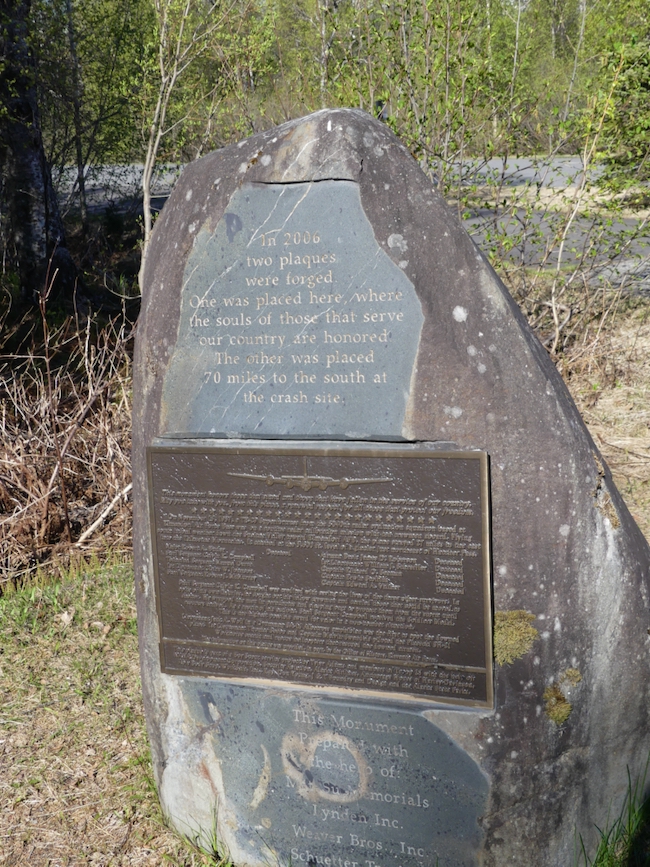

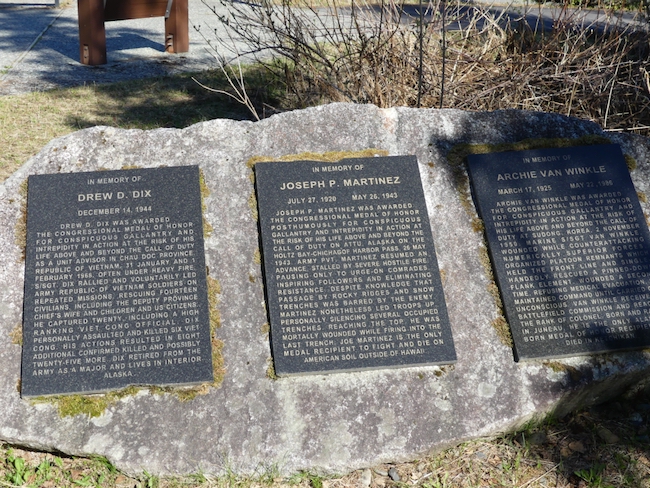
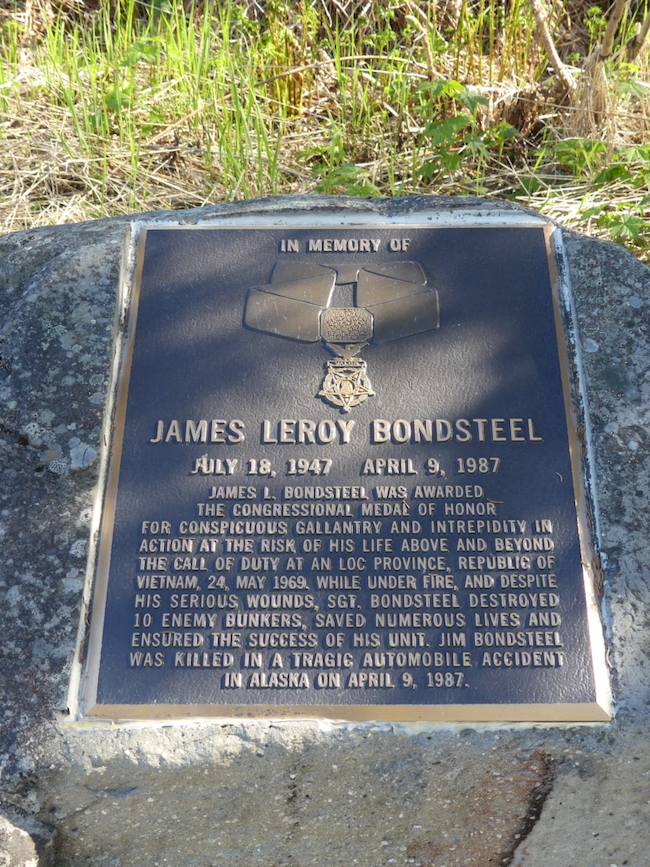

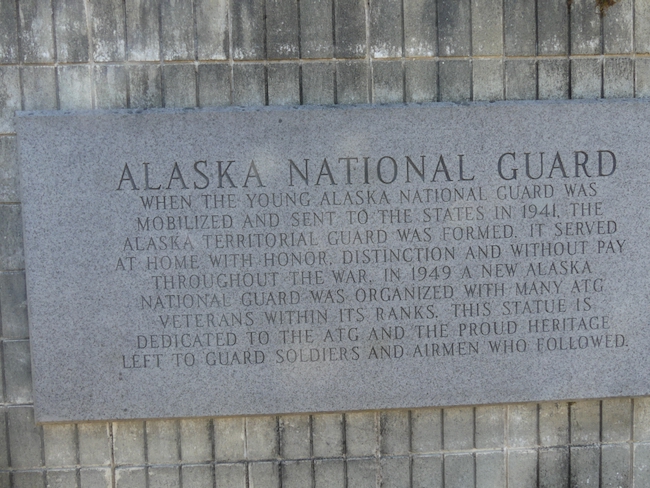
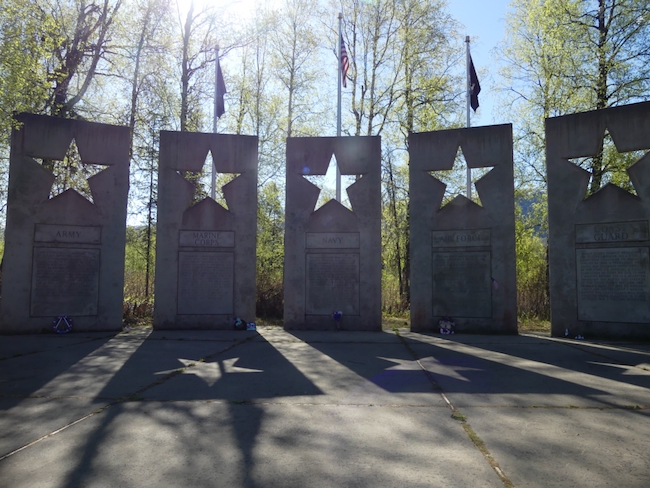
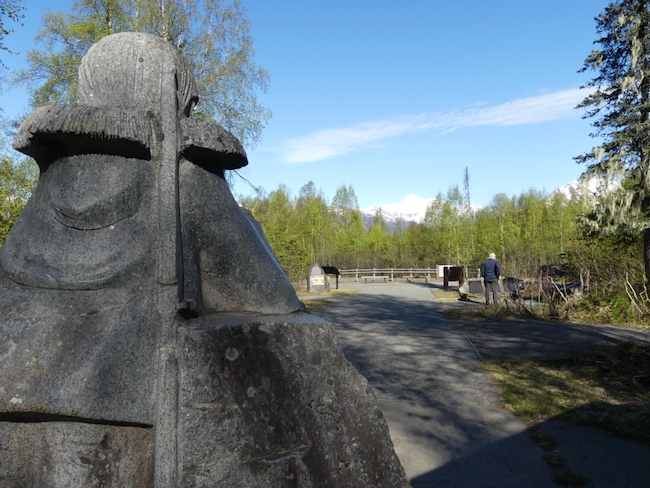
At this memorial, I ran into a childhood nemesis. I don’t know the scientific name. As children, we called it Devil’s Club, and it grows in patches, and it scared us to death. Whe kids got mean, they might cut down a Devil’s Club and threaten one of the younger kids. It could really hurt, too, if you got hit with one.

Education: Florida Ranks LAST in United States
My husband and I volunteer at a public elementary school. The teachers and administrators are heroes, battling a cynical Republican administration that increasingly limits public spending on education and local initiatives. This is a heartbreaking but accurate indictment. I ask myself why an administration would NOT want an educated population?
Florida schools rank last in new national report

ALAIJAH CROSS, TALLAHASSEE DEMOCRAT
Tue, June 23, 2026 at 4:06 AM CDT
Among other national education research institutions, the Network for Public Education ranked Florida last for its lack of commitment and support for public schools.
The network, a nonprofit advocacy group that promotes and researches policies supporting traditional public schools, has evaluated and held states accountable for how public education is managed and upheld.
With scores up to 100, each state was evaluated based on privatization, school finance, and student and teacher supports.
“The grades in this report are not merely academic assessments influenced by demographics or changing test standards. They are a measure of how seriously each statehouse takes its obligation to the children who attend public schools within its borders,” says the report, released through a press release.
Florida earned an F, with 14 out of 100 possible points earned.
“The states most aggressively redirecting public funds toward private alternatives were also the states most neglectful of their public schools, their teachers, and their students. Privatization and disinvestment, it turns out, go hand in hand,” the report adds.
Florida has steered billions in taxpayer funding to private school programs with limited oversight, a policy critics say disenfranchises public schools and the communities they serve.
Proponents contend that private school programs increase educational choice and competition, potentially improving outcomes for students and families seeking alternatives to traditional public schools.
A lawsuit filed by the Florida Education Association against the State Board of Education argues that traditional public schools must comply with a growing set of laws governing safety, staffing, student services, facilities and finances, while charter and private schools receiving public funds operate under significantly fewer requirements.
FEA President Andrew Spar said the last straw which prompted legal action was the 2026 legislative session.
“We saw bills that were going to address the massive teacher and staff shortage, address the pay and equity gaps that exist, address the funding inequities we have between public schools, charter schools and private schools; and lawmakers didn’t act on any of those,” Spar previously told the Tallahassee Democrat in May at a press conference.
Including Florida, 17 states received F grades, 13 states received B grades and 13 additional states earned a C grade. Seven states were scored a D and only two states earned an A, Nebraska and Vermont.
The report says: “States that most aggressively expand vouchers and charter schools are the same states that underfund their public schools, underpay their teachers, and provide the weakest protections for students. Our analysis found what statisticians consider a moderate/strong relationship with a probability of occurring well beyond chance between the expansion of irresponsible ‘choice policies.’ ”
Florida lawmakers reached an agreement May 29 on a $115 billion state budget, boasting a total of $21 billion in funding for education at a time when critics are calling out the state for chronically underfunding public schools.
For example the base student allocation, which is also considered “per student” funding, increased by $85, from roughly $8,900 to about $9,000.
After rising expenses, however, some say it isn’t an increase at all. With rising health insurance, supply costs and labor, advocates say the increase should be at least $1,000 per student.
Spar said the budget “ignores the needs of hurting communities.”
Florida has now ranked at the bottom of several national research reports on education, including the National Education Association’s listing on teacher pay, and the Education Scorecard’s state-by-state analysis on academic achievement.
“It’s no surprise that a failing woke institution would rank Florida, a national leader in education, last whenever possible,” a state education department spokesperson previously told the Tallahassee Democrat in response to its low ranking on the Education Scorecard in May.
“Who Would Do Such a Thing?”

From Heather Cox Richardson’s post on June 20, 2026:
Until his second term in office, Trump has always been protected from the fallout from his own actions, and it appears he has become accustomed to simply describing his fantasy world and expecting that others will agree they see it. If his “fix” for the reflecting pool failed, someone else must be responsible, and they must pay for it. . . .
Minnesota governor Tim Walz commented: “Found an imaginary problem, said only they could fix it, didn’t listen to experts, hired buddies who grifted millions, failed miserably, bragged how great it went. The entire Trump presidency in a nutshell.”
Here’s what I love. Trump gave a no-bid, inflated contract to one of his Mar-a-Lago buddies to do this job. Guess it’s name: GREENWATER SERVICES. He got what he paid for.

“You Watch, Gas Prices Will Drop Like a Rock!”
I filled my tank this morning with gas about 60 cents cheaper than last week.
I am very puzzled; gas prices fell “like a rock” the day after Trump said that as soon as peace was achieved, prices would drop like a rock. So quickly! I’ve seen prices go up overnight, but I have never seen prices go down so quickly!
We have a Memo of Understanding, not a peace treaty. We have identified areas of discussion (undisclosed) that the US will negociate with Iran over. We are in a poor position for negotiating.
From Wikipedia: Donald Trump announced the withdrawal of the United States from the Iran nuclear deal, formally known as the Joint Comprehensive Plan of Action (JCPOA), on May 8, 2018.
Which Iranians? Are they all on board? Are they the leaders of the country?
How will this treaty be any better than the Obama treaty Trump withdrew from in 2018?
How much will this cost the American taxpayers?
Who has made money off of this war? Who has been hurt?
How much has this war cost the world? How has it damaged our Trump-punched alliances?
I filled my tank because I know our strategic reserves are nearing depletion. I filled my tank because I don’t believe the truce will hold – it hasn’t held so far – and I filled my tank because I believe it is more wires and mirrors, trying to fool us into thinking things are better than they are.
Coming Home to Roost

There’s an old joke about Grand Juries being so suggestible that they will indict a ham sandwich in a paper bag.
Rarely does a Grand Jury presentation fail. Rarely, that is, when experienced prosecutors look at the evidence and decide a case is worthy of taking to trial, that the evidence supports the charges.
With changes to the Trump Department of Justice, however, grand jury cases are failing. Rules of presentation of evidence are broken. Private conversations with jurists take place. Claims are made which cannot be supported. Two things happen – some of the grand juries fail to bring back an indictment, and those that go forward are whacked in court, to the great embarrassment of those trying to follow Trumps instructions.
But don’t just listen to me – do a little educating yourself. Read the article in today’s New York Times by Alan Feuer called As Trump Politicizes Justice Dept., Prosecutors Struggle With Grand Juries
Politicized Weaponized Justice and Unintended Consequences

I laughed when I read about the end of the Trump IRS case. He was going to lose, so he pulled an appearant agreement with the Department of Justice, where attorneys are fleeing the use of the Department to go after Trump’s enemies. Trump doesn’t care that the evidence does not support a winning case. He wants his “enemies” charged, like he was. He was found guilty, by a jury of his peers.
A very smart attorney, someone say like James Comey, will be able to find a way to use this case, and the funds set aside, to charge the current Department of Injustice with discrimination, that these funds should be widely available to those who believe the Justice Department has gone after them for purposes of vengeance, rather that breaking the law. This gang of dunces have opened a loop of opportunity, just one more tragic comedy in a regime of careless, callous, destructive actions.
This is from the news service 1440:
| Anti-Weaponization Fund’ |
| The Justice Department yesterday announced a $1.776B taxpayer-funded program to compensate individuals who claim the DOJ politically targeted them. The figure appears to be a nod to America’s founding year. Payments would come from the Treasury’s Judgment Fund, an uncapped account used to settle federal cases. The “Anti-Weaponization Fund” is part of a settlement resolving President Donald Trump’s $10B lawsuit against the IRS over the leak of his tax returns, along with civil claims tied to the Russia probe and the search of his Mar-a-Lago residence. Trump and his family will receive a formal apology but no monetary damages. The tax case stems from disclosures by a former IRS contractor who was sentenced to prison for leaking high-profile figures’ tax data between 2018 and 2020.A five-member commission, appointed by the attorney general and removable by Trump, will oversee claims through December 2028. The fund is modeled after an Obama-era program that compensated Native American farmers for discrimination in federal lending programs (see DOJ explanation). |
He who accuses, accuses himself.

Robert Reich: Freedom Summer 2026
Robert Reich shares an idea for hope in a shocking season of gerrymandering. Win anyway, by registering voters. Michelle Obama would say “we go high”:
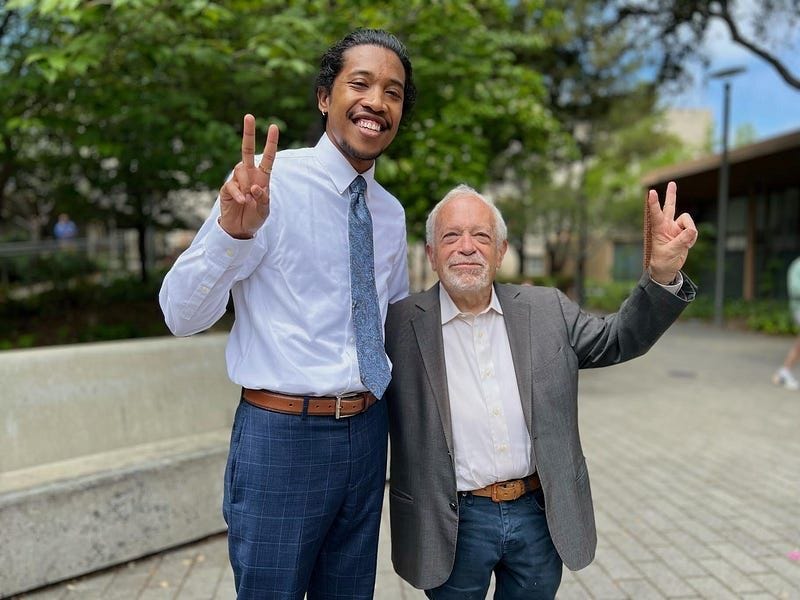
Friends,
Yesterday I spoke with Tennessee state representative Justin Jones, one of the nation’s young Black leaders who’s been a rising star in Tennessee politics, about the Supreme Court’s shameful April 29 decision in Louisiana v. Callais, gutting Section 2 of the Voting Rights Act.
Jones told me that, at Trump’s urging, Tennessee Republicans had prepared a redistricting map even before the Court announced its decision. Then, despite pleas from Black voters and voting rights advocates, the white Republican legislators moved their meeting to another room without allowing the public in to watch, passed the new map out of committee, and enacted it within 24 hours.
The new map has eliminated Tennessee’s one remaining Democratic district around Memphis, a city of about 610,000 people, about two-thirds of whom are Black — by cracking it into three majority-white district, one stretching hundreds of miles. The map has also divided Nashville, another city with a Black majority, into five white-majority districts.
Jones described Tennessee house speaker Cameron Sexton as the “grand wizard in chief,” explaining that “that’s what they want to do. They want to create a process that is unfair and unequal.”
Other Southern states have joined Tennessee’s rush to redistrict.
Louisiana’s governor has ordered that the state’s ongoing congressional election be set aside while state lawmakers redraw maps to eliminate a Democratic-majority – that is, a Black-majority – seat covering Baton Rouge.
At Trump’s request, Alabama Republicans have approved legislation directing the governor to schedule new primary elections this year under a GOP-friendly map that would end districts represented by Black lawmakers, if courts lift an injunction on its redistricting.
The Mississippi legislature will soon convene in a Confederate-era capitol building that it hasn’t used in 100 years, presumably to eliminate the Democratic majority in the one Mississippi district held by a Black representative.
South Carolina’s Republican majority in the statehouse voted Wednesday to extend its legislative calendar, allowing time to consider whether they should eliminate the state’s sole Democratic-majority, Black-majority district, held by long-serving representative James Clyburn.
Florida was already in a special redistricting session when the Supreme Court announced its decision, enacting a congressional map for its 28 districts that packs Black and brown voters into four districts on the south Florida coast and Orlando, eliminating every other Democratic majority.
“We’re going backwards at warp speed,” Jones told me. “In just over a week, we’ve gone from the 1965 Voting Rights Act back to the era of Jim Crow.”
I asked him what he and other Black political leaders in the South were planning to do.
“There’ll be a lot of litigation,” he said, “but we can’t be optimistic with this Supreme Court.”
“So, what’s the strategy?”
“We need the biggest voter turnout in history this fall. Every Black person, every Brown person, every Democrat, everyone who cares about the moral soul of this nation has to vote for equal voting rights. Take over Congress. Increase our power in state legislatures. This is the only way to respond.”
“I’m with you,” I said, “but I really wonder whether that’s possible.”
“How about a new Freedom Summer?” Jones responded, with a smile. “A multi-racial force of young people fanning out across the South, registering voters, getting them to the polls, just like they did in 1964.”
“I remember. I lost a dear friend in Mississippi Freedom Summer.”
“I have no direct memory, of course,” Jones said. “I was born in 1995, thirty-one years after Freedom Summer. But the South is almost back to where it was then. So, yes, it’s possible. It’s got to be possible.”
I told him I’d share his idea with you, and ask you for your responses.
Recent Comments
Kitchen on Isiais: Winding Down intlxpatr on Shampoo Ginger tigerbutterya0c5ff1d… on Shampoo Ginger intlxpatr on British Soldier Kidnapped, Esc… John on British Soldier Kidnapped, Esc… Wikipedia Donate Button

Amazina


Early Voting in Florida


