The Moonstone in Moclips
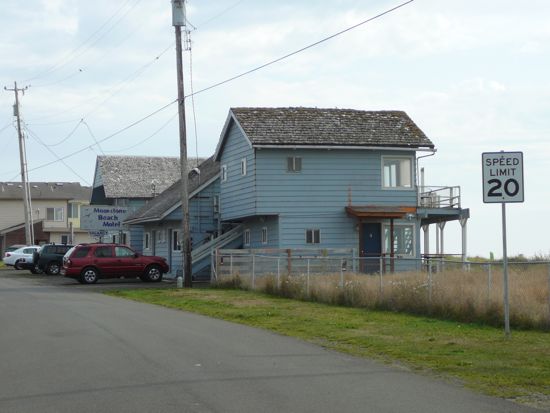
Moclips is one of the northernmost beaches on the Washington coast, not a far drive from Seattle, maybe 3 hours. We stopped in Aberdeen for cold groceries – milk. orange juice, salads, etc. so it took us a little longer, and we weren’t in a hurry.
We have reservations at the Moonstone. The Moonstone is not your five star kind of place, it is a very old timey Washington beach kind of place, the kind you stay when you are clam digging.
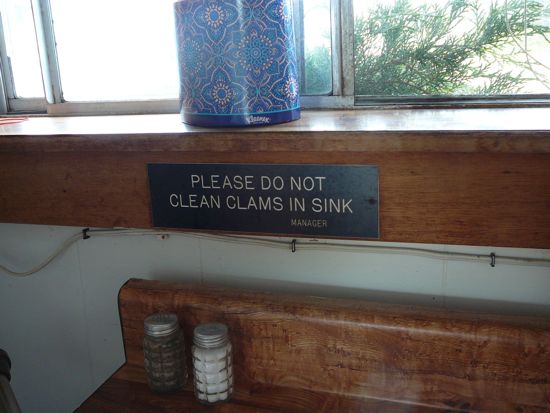

We have a little two bedroom cabin with a kitchen and bathroom, not fancy, actually, you could sleep six people if you wanted to. It would be a tight fit, but families do it.
It is a great beach for clams. Here is what clams look like when you go clam digging:
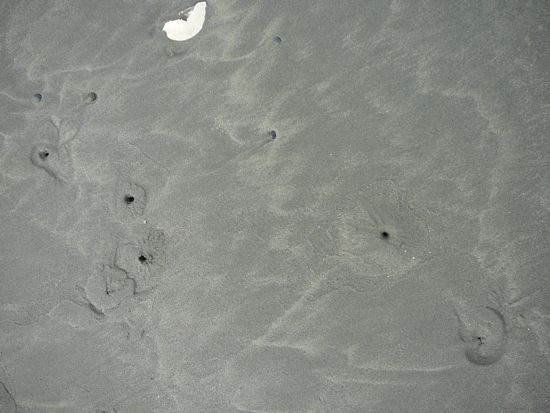
See those holes? There are clams beneath the surface. You stomp; a clam squirts and then you dig like crazy, with a “clam gun” which is a special narrow shaped shovel, or with your hands if you are really really fast and don’t mind losing all your fingernails. When you grab the clam, it is really hard to pull him out, because he is digging down like crazy.
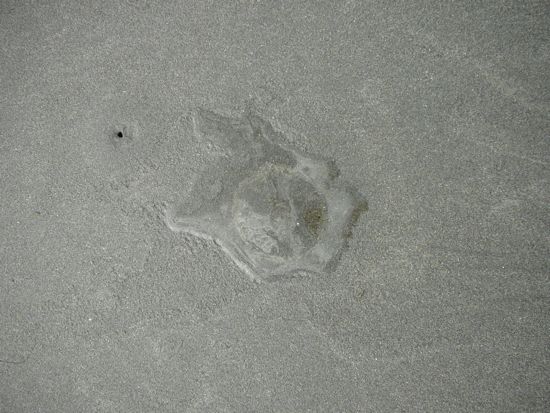
This is what it looks like when a clam is digging down – a tiny fountain of water behind him bubbling up:
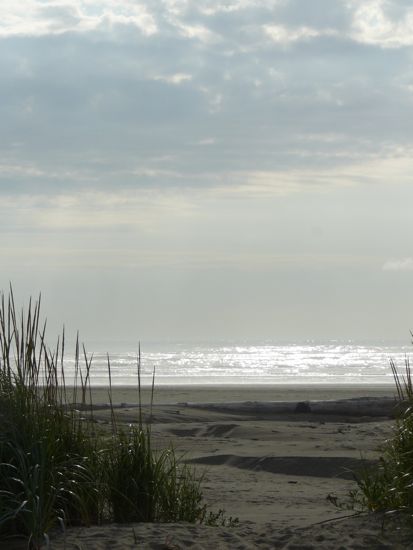
This is what the beach looks like from our cabin:
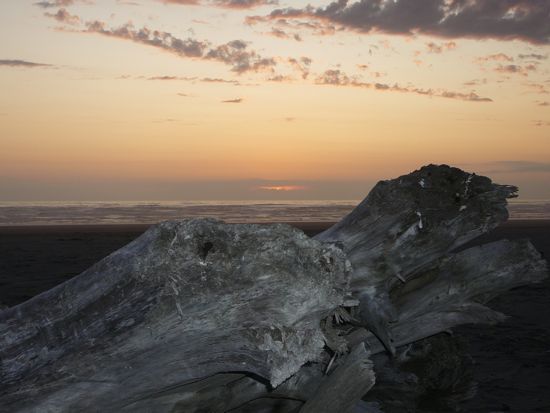
And this is what it looked like at SUNSET!
Breakfast at Claire’s
There are two main streets in the little town I call home, Edmonds, Washington, just north of Seattle. One street is called Main Street (no surprise!) and it ends at the dock where the ferry loads up passengers and cars to go over to Kingston, so it is called the Kingston ferry. Just up the street from the ferry dock – and it is UP, Seattle is full of hills – is Claire’s Pantry.
I don’t remember a time when Claire’s wasn’t there. I remember going to the same place for seafood buffets; but maybe it wasn’t Claire’s at that time. Mostly we go to Claire’s for breakfast.
They have everything. Mom opens the menu and says “I am NOT going to have Eggs Benedict this time” and scans through the huge variety of pancakes and omelets and breakfast specials.
I already know what I want. Not Eggs Benedict. CRAB Benedict.
Mom sighs and closes the menu. When the waitress comes, she orders.
“I’ll have the Eggs Benedict, please.”
LLLOOOLLLLL!
I only took one photo because her Eggs Benedict looked just exactly like my Crab Benedict.
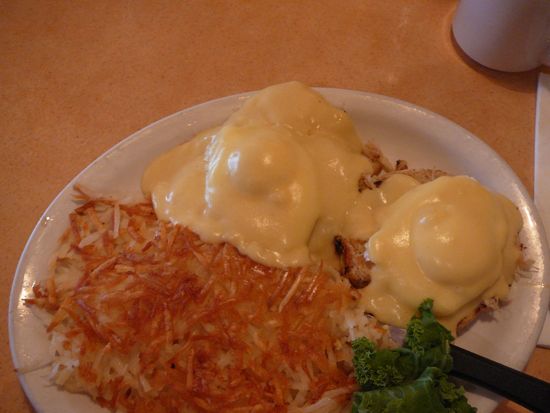
And before you ask – NO! No! We didn’t eat it all! We could never eat it all! Mom took half home in a box, and I just ate the eggs and crab and a little bit of the hash browns and left the rest. It was too much and too rich!
Ivar’s Seafood Bar and Lunch on the Waterfront
It’s another gorgeous day in Seattle, hitting around 87°F/29°C, blue skies, not a cloud in sight, a day everyone heads for the beach.
My Mom LOVES the beach.
“How about if I pick up lunch and we eat on the beach?” I ask her, and she agrees almost before I ask. “But I don’t need a big lunch,” she adds, “only two pieces of fish and no fries, I’ll just eat a couple of yours.”
I hardly ever order fish and chips. I almost never order fries. How could she know me for so long and not know that?
After running my errands, I hit the Ivar’s Seafood Bar and order – two orders of fish and chips.


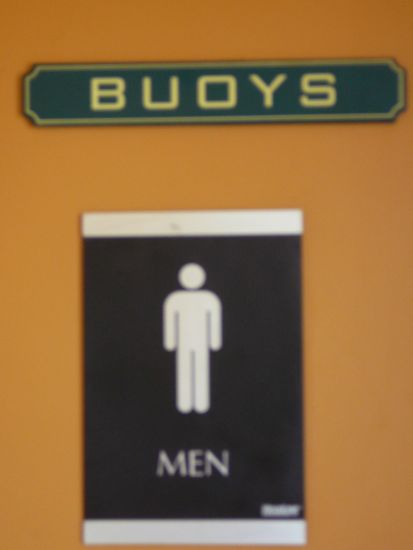
The restrooms:
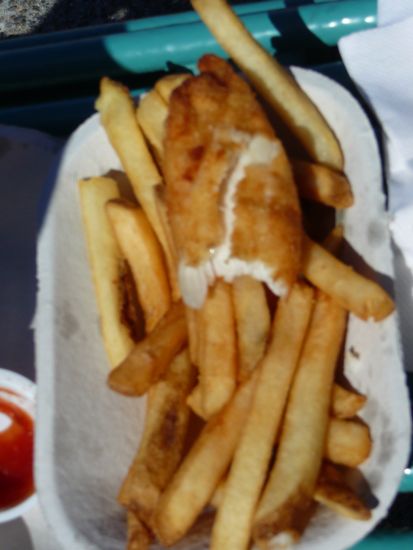
I remembered to take a photo of the fish and chips before the fish was entirely gone 🙂
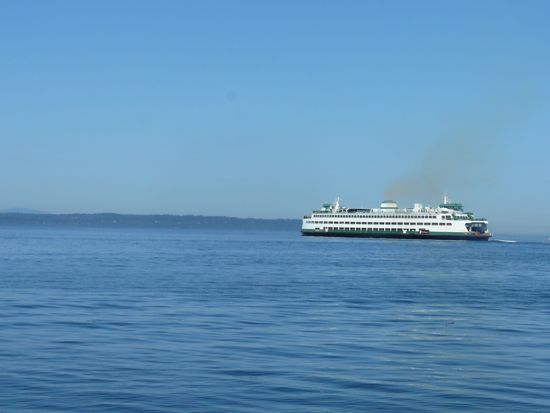
I picked up Mom and we drove to the waterfront, scoring rock-star parking and a park bench with a view that went forever, right off the beach and watching the Edmonds ferry come in and out of the dock:

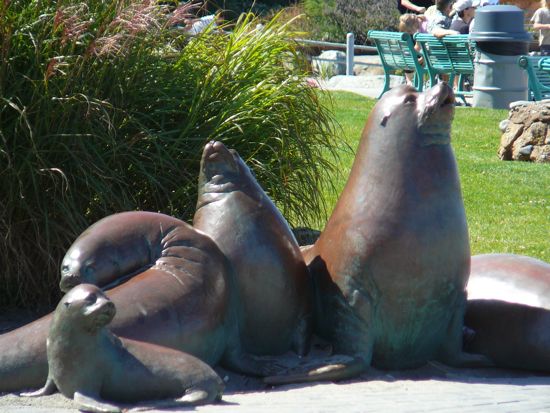
And then we went home and waited for Mom’s new red chair to be delivered, which it was, and it is beautiful!
Ramadan For Non Muslims
This is becoming a tradition. I wrote the first Ramadan for Non Muslims post in 207, and repeated it last year. As Ramadan moves inexorably into the hottest months of the year, the sacrifice only increases. Ramadan is slated to start this year on August 22, but that will be determined by the moonsighting committee; those who watch for the very first glimmer of the thinnest crescent moon of the lunar month of Ramadan.
Already, stores are increasing their supplies of specialty foods, which includes, to my amusement, oatmeal, which I must eat, and I detest. There are also increased supplies of nuts and candied fruits, eggs and creams and fabulous desserts and exotic fruits. Little lambies are not long for this earth, and cows and grown sheep are not far behind. This is not the season for killing the fatted fig.
My first Ramadan ever, in Tunisia in 1979, I remember they had bananas – it was the only time all year we saw bananas, real Chiquita bananas, a boat brought them in. On the other hand, the night I had a dinner party, eggs totally disappeared, and cream, all bought up by what my friends call “the Ramadaners.”
Imagine, if you can, an entire month of Advent and Christmas. Observant Moslems fast every day, from dawn to sunset, and gather with family and friends to celebrate and feast every night. Some women have a new dress for every day of Ramadan. The tailors are crazy; this and the Eid al Kebir provide them with guaranteed income and their busiest time of the year.
Most Westerners don’t understand Ramadan. I wrote the original article to try to explain Ramadan to them, that the season is as holy to them as our Lent and Easter are to us. Ramadan was the month when The Qur’an was transmitted to Mohammed by the angel Gabriel. Most Moslems try to read through the entire Qur’an at least one time during each Ramadan, and then many go to Mekka on the Hajj at the end of Ramadan. I have given you references to both of the original articles, because as is my great joy on this blog, my readers filled in a lot of blanks, and gave us a lot of information that I didn’t have. The comments at the end of the two articles are better than the original article, thanks to my readers.
Please, if you have anything to add, ahlen wa sahlen, you are welcome. It is a joy to learn from you.
First Ramadan for Non Muslims + comments
Second Ramadan for Non Muslims + comments
Ramadan started last night; it means that the very thinnest of crescent moons was sighted by official astronomers, and the lunar month of Ramadan might begin. You might think it odd that people wait, with eager anticipation, for a month of daytime fasting, but the Muslims do – they wait for it eagerly.
A friend explained to me that it is a time of purification, when your prayers and supplications are doubly powerful, and when God takes extra consideration of the good that you do and the intentions of your heart. It is also a time when the devil cannot be present, so if you are tempted, it is coming from your own heart, and you battle against the temptations of your own heart. Forgiveness flows in this month, and blessings, too.
We have similar beliefs – think about it. Our holy people fast when asking a particular boon of God. We try to keep ourselves particularly holy at certain times of the year.
In Muslim countries, the state supports Ramadan, so things are a little different. Schools start later. Offices are open fewer hours. The two most dangerous times of the day are the times when schools dismiss and parents are picking up kids, and just before sunset, as everyone rushes to be home for the breaking of the fast, which occurs as the sun goes down. In olden days, there was a cannon that everyone in the town could hear, that signalled the end of the fast. There may still be a cannon today – in Doha there was, and we could hear it, but if there is a cannon in Kuwait, we are too far away, and can’t hear it.
When the fast is broken, traditionally after the evening prayer, you take two or three dates, and water or special milk drink, a meal which helps restore normal blood sugar levels and takes the edge off the fast. Shortly, you will eat a larger meal, full of special dishes eaten only during Ramadan. Families visit one another, and you will see maids carrying covered dishes to sisters houses and friends houses – everyone makes a lot of food, and shares it with one another. When we lived in Tunisia, we would get a food delivery maybe once a week – it is a holy thing to share, especially with the poor and we always wondered if we were being shared with as neighbors, or shared with as poor people! I always tried to watch what they particularly liked when they would visit me, so I could sent plates to their houses during Ramadan.
Just before the sun comes up, there is another meal, Suhoor, and for that meal, people usually eat something that will stick to your ribs, and drink extra water, because you will not eat again until the sun goes down. People who can, usually go back to bed after the Suhoor meal and morning prayers. People who can, sleep a lot during the day, during Ramadan. Especially as Ramadan moves into the hotter months, the fasting, especially from water, becomes a heavier responsibility.
And because it is a Muslim state, and to avoid burdening our brothers and sisters who are fasting, even non-Muslims refrain from eating, drinking, touching someone of the opposite sex in public, even your own husband (not having sex in the daytime is also a part of fasting), smoking is forbidden, and if you are in a car accident and you might be at fault, the person might say “I am fasting, I am fasting” which means they cannot argue with you because they are trying to maintain a purity of soul. Even chewing gum is an offense. And these offenses are punishable by a heavy fine – nearly $400 – or a stay in the local jail.
Because I am not Muslim, there may be other things of which I am not aware, and my local readers are welcome to help fill in here. As for me, I find it not such a burden; I like that there is a whole month with a focus on God. You get used to NOT drinking or eating in public during the day, it’s not that difficult. The traffic just before (sunset) Ftoor can be deadly, but during Ftoor, traffic lightens dramatically (as all the Muslims are breaking their fast) and you can get places very quickly! Stores have special foods, restaurants have special offerings, and the feeling in the air is a lot like Christmas. People are joyful!
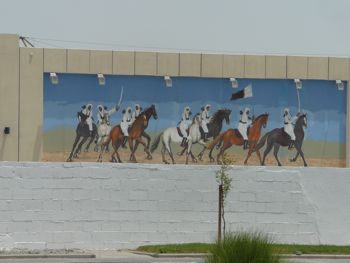
Qatar Murals
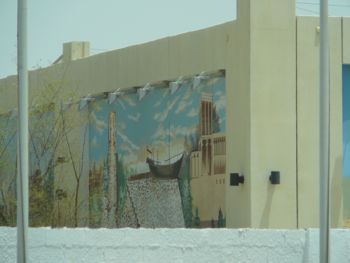
You know how I love public art. I especially loved, in Kuwait, how all the power stations had scenes of dhows, and majaalis, and lanterns – Kuwait things. In Doha, there is a long wall – I think it might be around a power station, but I am not sure.
Yesterday AdventureMan had to take a phone call and – probably because I was in the car – pulled over to take it. We were right across from the wall, which I have been dying to photograph but never could because we were always zipping right by and there was a lot of traffic.
Fridays are quiet. It was during Friday prayers, perfect. Here are some photos:
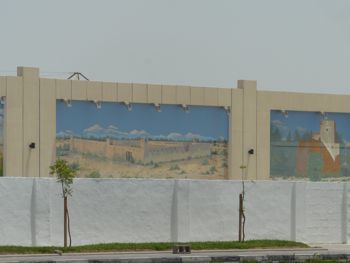


This one is my favorite. I know the boat is carrying gas, but don’t they look like huge, giant pearls? And then look to the left, to the reference to the giant oyster on the Corniche with the gigantic pearl:

The Guernsey Literary and Potato Peel Pie Society
I don’t know why I didn’t read this book sooner! First, I saw people like me reading it in airports, and it certainly has a memorable title. The people reading looked totally engrossed. I’m not one to strike up conversations in airports, but on occasion, when I see people reading a book I don’t know about and it is the size of the books that book groups usually read, I will ask, and write it down, and bother the person no further.
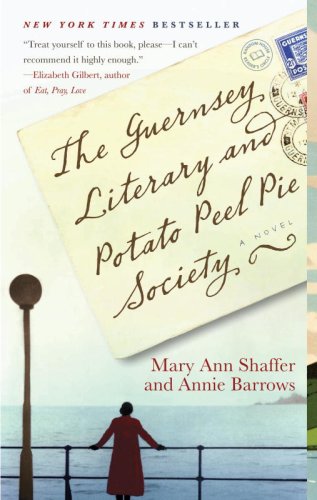
I had ordered it on amazon.com when my son’s wife’s father’s wife (and you thought Gulf relationships were complicated!) mentioned to me in an e-mail that she was reading it and that she could barely tear herself away. She and I often pass really good books and/or recommendations back and forth, so that bumped it up a few notches in priority. When it got here, I had just finished Rutherfurd’s London (oops, I thought I had reviewed it, and I haven’t, so I will,) and I thought it was a southern book, like The Ya-Ya Sisterhood or Sweet Potato Queens, no, you are right, I hadn’t read anything about it, just trusted from all the people I saw reading it that it was good, but because of the name, I thought it would be light.
Wrong!
It isn’t depressingly heavy, like The Little Prisoner was heavy, and it had some totally wonderful laugh-out-loud moments, but the subject matter was the German occupation of the island of Guernsey, in the English Channel, and an author in search of a book topic in post-war London, and a little girl born outside of marriage and cared for by a village of caring people. It is spiced up by a dashing romance, and the process of relationship building that happens in the novel, unlikely relationships, aren’t those the very best kind for spice? 😉
The entire story is told in letters. The primary voice, that of Juliet, a thirty-something author, ties all the letters together, but not all letters are to her or from her. It is a great technique for allowing many different voices and many different perspectives. From the first page, you are captivated. Right now, Guernsey is more real to me than the boxes I need to unpack, and there is a part of me that yearns to flee to Guernsey and find a house near a cliff where I can watch the sun set in the west and the clouds turn colors . . .
Here is one sample of the kind of letters you will find when you read The Guernsey Literary and Potato Peel Pie Society. Don’t wait! This is an unforgettable book!
1st May 1946
Dear Mark,
I didn’t refuse, you know. I said I wanted to think about it. You were so busy ranting about Sidney and Guernsey that perhaps you didn’t notice – I only said I wanted time. I’ve known you two months. It’s not long enough for me to be certain that we should spend the rest of our lives together, even if you are. I once made a terrible mistake and almost married a man I hardly knew (perhaps you read about it in the papers) – and at least in that case, the war was an extenuating circumstance. I won’t be such a fool again.
Think of it: I’ve never seen you home – I don’t even know where it is, really. New York, but which street? What does it look like? What color are your walls? Your sofa? Do you arrange books alphabetically? (I hope not.) Are your drawers tidy or messy? Do you ever hum, and if so, what? Do you prefer cats or dogs? Or fish? What on earth do you eat for breakfast – or do you have a cook?
You see? I don’t know you well enough to marry you.
I have one other piece of news that may interest you: Sidney is not your rival. I am not now nor have I ever been in love with Sidney, nor he with me. Nor will I ever marry him. Is that decisive enough for you?
Are you absolutely certain you wouldn’t rather be married to someone more tractable than I?
Juliet
Written by Mary Ann Shaffer and Annie Barrows, the book will challenge your ideas, will inform you of an obscure episode in World War II, will make your heart sorrow at the inhumanity of which we human beings are capable towards one another, and make your heart sing at the goodness in the human soul. That’s pretty amazing for one book.
Dar Al Thaqafa in Doha, Qatar
I have very special feelings about Dar Al Thaqafa. When I was new in Qatar, as I started to read a very special book, it fell out of the binding. Maybe the heat has melted the glue, I don’t know, but it was not my book! It was loaned to me by the Ambassador to Qatar from Japan, and holy smokes, I had ruined it!
I went ahead and read the book, and then I had to figure out how to get it re-bound. I asked around, no one had any idea. Finally, I asked at one of the Dar al Thaqafa stores (there are several in Doha) and they told me about the Dar al Thaqafa printing plant, which was not far from where I lived.
I took the book there. They said they could rebind it. It would take about a week. I didn’t even ask the cost; it didn’t matter, I had to return the book in good condition.
When I went to pick up the book, they wouldn’t let me pay them. The man who gave it to me – with beautiful bindings and end-papers – had a big prayer bump on his head. He told me he wanted me to remember that not all religious Muslims were terrorists. I almost cried. Maybe I did, a little, when I got back to the car, it is just such a perfect example of God’s grace, and how we are supposed to love one another and be kind to one another.
So this weekend, as I drove around familiarizing myself with my old secret back ways to get places, I came across the first Dar Al Thaqafa book store I ever visited, with Little Diamond, down near the Dira’a fabric souks. You would hardly know it was there, if you didn’t know it was there. We only found it because the toy vendor outside had some dancing Saddam Husseins and Osama bin Ladens – I have never seen them anywhere else. Then we spotted the bookstore – and oh, what heaven, all kinds of books, a bookstore any book lover would love:
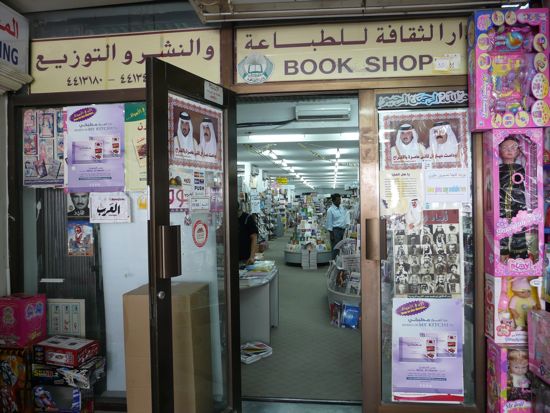
Qatar is a conservative country. You might be wondering how I can take pictures so freely – I always ask.
So I asked if I might take photos of the bookstore.
“Why” asked the man at the desk.
“I love this bookstore,” I responded, “and I take photos of places that might not exist in the next five or ten years. I try to record what was special and unique in a country.”
He beamed with delight!
“This is the oldest bookstore in Qatar!” he exclaimed! “This is the original of all the Dar al Thaqafa bookstores!” He gladly gave me permission to photograph.

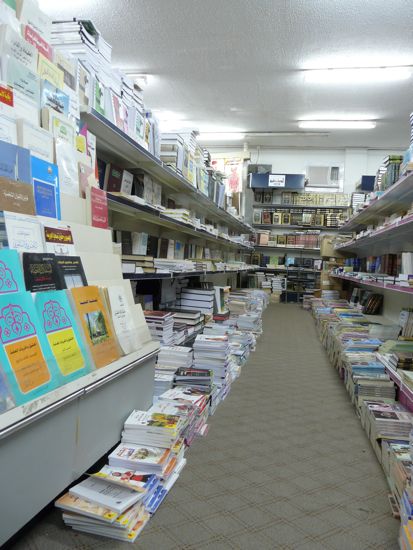
They carry textbooks, reference books, religious books, children’s books, and all kinds of school supplies, from the most elementary grades through the most specialized university courses.
You know I read and write Arabic on a very very basic level. I can proudly say my niece, Little Diamond reads and writes on a fluent level, and as we leave book stores, we are often staggering under the load of the books she buys to take home and read. This store, and the Jarir bookstores, are a couple of our favorite stops.
I had a family cookbook printed with all our best of the best recipes – the Dar al Thaqafa on Merqab did the printing and cover and binding for me. They did a great job.
As much as I like going to a Barnes and Noble, you walk into just about any Barnes and Noble and it is like walking into the same one, whether you are in Pensacola, Seattle, Houston, Charleston – they all pretty much follow the same pattern. It is calculated and more than a little sterile. Not so the Dar al Thaqafa, where books are piled here and there, pens are all in one place, children’s books in piles – you kind of have to search for what you want, but they usually have it, or can find it for you, or tell you where to go for it.
Susan Wittig Albert: Nightshade
In her ongoing China Bayles mystery series, China and her husband investigate the death of China’s father, with some amazing outcomes.
These are not heavy reading. This series features a burned-out criminal defense lawyer, who, sick of the slime and the jockying for power and position, cashes in her retirement plans and buys a shop in the small fictional town of Pecan Springs, Texas, where she opens an herbal shop, Thyme and Seasons, which sells live potted herbs, but also herbal wreaths, herbal soaps, herbal bath bombs, herbal teas, herbal shampoos, etc – and shares space with a new age shop called The Crystal Cave, a tea shop called Thyme for Tea, a catering company called Party Thyme and a personal chef service called Thymely Gourmet. She and her girlfriends have a lot of fun.
And, somehow, even in this idyllic life, mysteries seek out China, and she is often involved in crime-solving outside of her normal business. This time, her brother – the brother she never knew she had, the brother her father had with his secretary while China was growing up, wondering where her father was all the time – is murdered, in what appears to be a hit-and-run accident, but is no accident at all. Her brother was trying to get China involved with finding out how and why their father died – another apparent accident, which was no accident. When China isn’t interested (she is still very angry with her dad for what she perceives as a betrayal of her and her mother), her brother hires China’s husband as a private detective to examine the evidence. Then – her brother is killed. China gets involved.
It’s great escape reading, but you often end up learning something, too. China is an idealist, fighting crime and corruption, and God knows, there is enough of that, all the world around, to keep a legion of fictional crime fighters busy.
“After I grew up and joined the Houston legal fraternity, I began to understand what was common knowledge in that gossip-driven oil company town: Robert Bayles and his partner Ted Stone had built their legal practice on dubious oil and energy deals, questionable land transactions, and political dirty work. Their clients included polluters, looters and influence peddlers. Both Ted Stone and my father were frequent guests of the Suite 8F crowd, the group of influential conservatives who met on the eighth floor of Houston’s Lamar Hotel and collectively decided who was going to run for what political office, at the state level and beyond. To ensure that their picks – LBJ had been one of them – made it to the winner’s circle, Suite 8F slipped wads of campaign cash into the necessary pockets. Their contributions decided which politicians moved into positions of power and influence.
Just as important, their money brought them preferential treatment when the bidding opened on lucrative government contracts for dams, ships and shipyards, oil pipelines, military bases at home and abroad, NASA’s Johnson Space Center in Houston. The Lamar Hotel was demolished in 1983 to make room for a skyscraper, but the political influence of 8F lingers like a foul odor, a dirty fog. It’s the subject of books, of doctoral dissertations, of documentaries. It’s common knowledge.”

Reading Albert is a great escape. Even knowing that sweet little Pecan Springs is a microcosm of the rest of the world, not untouched by human frailty, it is a sweet place with a culture all its own. China’s life, surrounded by her loving husband, her stepson, all their pets, their friends, the places they eat, it’s all comfortable, an herbal scented different world.
Kuwait: Our History Runs in our Blood (Mohammed Ali Dashti)
Kuwaitis showing new interest in the past; Traditions, culture wiped out by ‘change’
From today’s Arab Times; you can read the entire interview by clicking here
A born artist makes it his life’s mission to chronicle the past of Kuwait using his artistic skills and his academic erudition. His brush strokes have brought to life scenes from a Kuwait straddling a dying hidebound order and a modern state taking birth. His passion drove him beyond the pale of his canvas to physically revive some lost traditions for posterity.
Read on to find out more about Mohammed Ali Dashti’s enchanting four-decade long mission and some of the precious values from the past which we have now lost and which he fears we may never recover.
Q: You are involved in a rather enchanting profession of recreating the past. What is your goal?
A: When oil was discovered in Kuwait, the state underwent a rapid transformation. The change was very sudden and very fast. In a short span of time, Kuwait leapt from an ancient system to a very modern state. This change wiped out many elements from our traditions and culture.
Until sometime ago, the people of Kuwait were disposing of the antiquated paraphernalia from their homes. But now, there is a sudden interest in these items, and now they are buying them back to preserve the past. It is the only way of holding fast to our roots and knowing how our forefathers, not from a distant past, conducted their lives. Kuwaitis are buying doors and furniture used in the old Kuwaiti homes.
We, as an organization, are working to preserve our history for posterity to learn and know. We produce ancient household items like the Mubkhar (incense stand) with which our grandparents used to scent clothes and fan fragrant smoke around the house.
In the old days, we had no airplanes or cars. The only way we were connected with other places in the region was the sea. Kuwait, owing to its geographical advantages, became a center for shipbuilding. Kuwaitis were experts in making dhows for different purposes. Boats were built in a variety of sizes and designs based on their use. There were cargo ships, fishing boats and vessels for pearl diving. The size of boats ranged from a meter to up to 6 meters. This is another aspect of history that we are trying to preserve and we have been recreating many of the original models our ancestors voyaged in.
We showcase our creations at universities, malls, schools and other places. Thus we have been able to generate interest in our past. We take our craftsmen along and explain to the present generation about Kuwait’s history.
Q: What do you think has created this new interest in the past among Kuwaitis? Can this be read as a reemergence of old traditional values?
A: Our history actually runs in our blood. It is very difficult to detach ourselves from our cultural roots. And so whenever any nation travels too far away from its true origins, at some point of time, it stops and tends to recall the past. History is what gives our existence contextual relevance. And we often try to find it by clawing back into our past, by remembering the way we came through.
Q: You said you make old-model boats. Aren’t you specialized in Warjiyas, the simplistic fishing boats from the past? Which is the biggest boat you have ever built?
A: The biggest boat I have ever built so far is 6 meters long. I make Warjiyas because it is most symbolic of our old fishing traditions. These boats were very famous among the people on Failaka Island. They used it for fishing and it is very easy to construct.
The specialties of Warjiya are: it is wholly made of palm tree to the last detail. The body is built with spines of palm leaf, which are trussed using ropes made our of palm fiber. It is very light and so easy to carry.
Warjiyas sort of became extinct about 60 years ago with the advent of oil and the independence of the state’s economy from fishing and pearl diving. We can’t return to those ancient livelihoods, and so we are now planning to start an annual Warjiya race to keep the tradition alive. The first race will be held in September this year.
Q: Do you have any plans of reviving even the tradition of fishing along with these boats?
A: No, as I said, we can’t actually go backwards to keep our original traditions alive. So, these things can only happen in a token manner. The aim is to keep the future generations aware about how their grandfathers and people before them lived. We don’t have to make our children live a similar life to make them appreciate the ancient way of life.
Q: All over the world there is great demand for antique items. Is what we are seeing in Kuwait a similar trend — a fascination for antique pieces — or is it more than that?
A: No. It is not just a fad in Kuwait. The people really care for the past and there are efforts at all levels to preserve relics from the past or have their duplicated versions. These efforts have been sincerely undertaken by Kuwait National Museum and other private museums in the country, and between them they share a vast treasure of valuable relics and information about Kuwait’s past.
The government is also giving due encouragement to all of us to help us in our endeavors. The ministry of information is doing everything within its means to promote our traditional and cultural heritage in other Gulf countries and beyond.
Sarrayat (Weather in Kuwait 9 April – 13 May)
I found this at Kuwait Agrifood Website as I was busy looking for Jasmine Farms, who grow some of the world’s greatest spinach. I love knowing that this season has a name, that it is not just me, it really is HUMID from day to day, and that the temperatures fluctuate wildly in this part of “warm Spring.”
SARRAYAT (9thApril – 13 th May )
This is the season of sarrayat ( Local thunderstorms), they usually develop in the afternoon or during night and are occasionally accompanied with severe dust storms during which visibility may fall to zero.
The resulted rain may be very heavy and usually occur during a few minutes (maximum intensity of 38.4 mm during 20 minutes was recorded on 4th April 1967 at Kuwait International Airport ).
The south – easterly winds during this peroid become hot and humid . Air temperature is characterized by sudden changes and may drop to 10C within one minute .
Temperatures from one day to another are changeble by particularly during the period 11th-30th April;they may rise to the summer mean level for a few days then drop to a noticable degree due to the influence of the north – westerly winds .
Seabreeze is predominant during May, shifting the north -westerly winds of the morning to easterly in the afternoon, tremperature mean ranges between 30C at the beginning of this period and 40 C at the end .
Thunderstorms are likely to occur during the intervals : 8 th – 12th , 16th, 22nd, 26th, April and 7th – 10th May .
Recent Comments
intlxpatr on Shampoo Ginger tigerbutterya0c5ff1d… on Shampoo Ginger intlxpatr on British Soldier Kidnapped, Esc… John on British Soldier Kidnapped, Esc… intlxpatr on British Soldier Kidnapped, Esc… Wikipedia Donate Button

Amazina


Early Voting in Florida


 Here There and Everywhere