Mobissimo
Have you heard about Mobissimo? It is one of the best sites for comparing airfares from one place to another. I owe this to a good friend, now working in Afghanistan. He makes his reservations through Mobissimo and shared the information with me.
You can include multiple destinations, something many of the travel sites don’t handle well, and you can see where you would be connecting and how long that connection will be.
I don’t always book through Mobissimo, but it is usually my first stop to get a glimpse of price comparisons and connections.
Alison’s Clam Chowder
This is one of the first recipes in my collection. My very best friend from college taught me how to make it and gave me the recipe. You can get all the ingredients in Kuwait, and can buy Kuwaiti clams in the fish markets and at the Sultan Center.
Alison’s Clam Chowder
This is still one of our very favorite soups – especially on a cold winter’s day. Serve with a baguette (French bread, not a diamond!) and a green salad. It’s all you need.
2 strips bacon (beef or turkey bacon in Kuwait)
1 large onion, chopped
2 cans clams and juice (drain the juice, but save it)
2 cups water
4 cups milk
1 large potato
Sautee bacon slowly, so it releases lots of grease. Take out bacon, chop it up, and reserve it.
Sautee onion in bacon grease until soft. Cool, add water and clam juice, and chopped potato. Cook until potato is no longer hard, but not too soft.
Add milk and warm to serving temperature, add canned clams and reserved bacon pieces. Sooooooooo EASY!
Kitchen Souk?
A reader wrote asking about where to find a cast iron skillet in Kuwait. I brought mine with me (if you use a cast iron skillet, you’ll understand*) so I haven’t been paying any attention to cast iron skillet availability here. I’m pretty sure I haven’t seen any in the local co-ops, and I can’t remember seeing any cast iron pans in the Sultan Center. City Center?
Is there a Kitchen souk in Kuwait, a place with lots and lots of pots and pans?
(A cast iron skillet is heavy metal, and a shiny grey when you buy it. You season it by rubbing it with oil and putting it in an oven on low heat for hours, even overnight. You never wash the skillet with soap, only with water and scouring pads, so you don’t lose the seasoned coating. When you have a well-seasoned pan, you carry it with you so you don’t have to start the process over! You can see a photo of my skillet at Cornbread and Chili)
Germany’s culture of shopping slowly changing
Little Diamond forwarded this to me from the Chicago Tribune. The battle to extend shopping hours in Germany has been going on for years. As the hours increase, the annual birthday celebrations described in the preceding blog entry will pass into “olden day traditions.”
By Tom Hundley
BERLIN – Unlike America, Germany has not yet adopted the shop-till-you-drop lifestyle, but things are starting to change.
Even in bustling cities like Berlin and Frankfurt, retailers used to roll up the sidewalks at 6:30 p.m. On weekends, Germans had to scramble to get their shopping done by 2 p.m. on Saturday. Sunday shopping was strictly verboten.
But a long battle over longer store hours is slowly being won by retailers who believe that more hours mean more money in the cash register. They are opposed by Germany’s powerful trade unions whose leaders say workers’ rights must be protected.
The gradual loosening of strict rules governing store hours also reflects a larger battle to loosen up a German economy that suffers from sluggish growth and 9.6 percent unemployment. Chancellor Angela Merkel’s government says it is eager for reform, but it has decided to leave the issue of store hours to local governments.
These days, the Galeria Kaufhof, a newly renovated department store in the heart of the former East Berlin’s shopping district, is crowded with customers until 10 p.m.
“Seven years ago we started a small revolution here in Berlin when we said we are opening on Sundays,” said Detlef Steffens, the store manager.
“We discovered a loophole: according to the law, you could open on Sunday if you were selling souvenirs, so we put stickers that said `souvenirs’ on all the merchandise,” he said.
“We were sued by other store owners. But that started an avalanche.”
Steffens’ store took its case to Germany’s federal constitutional court. The court rejected its arguments but said the particulars of Sunday shopping hours should be regulated by local authorities.
The Berlin city government decided to allow stores to open on six Sundays a year. Last year, it extended the number to 10, plus three extra Sundays during the World Cup soccer tournament.
Last November, Berlin threw caution to the wind and adopted a modified version of America’s 24/7 consumer ethos. Call it 24/6 – non-stop shopping for six days of the week and 10 Sundays.
The Galeria has opted to stay open until 8 p.m. Monday through Wednesday and until 10 p.m. Thursday through Saturday. The extra hours have increased revenue and enabled the store to hire 50 more employees, for a total of 1,080.
Steffens says his employees have generally been supportive of the longer hours.
“It’s an East-West thing,” he said, referring to the lingering psychological divide that still separates Germans who grew up in prosperous West Germany from those who experienced communist East Germany.
Almost all of Steffens’ employees are from the East. Those from the West, he said, are more likely to resist changes proposed by management.
“The trade unions are not so different from East to West, but worker councils in the East are more realistic. Here there’s more of a collective mentality: We are one team; it means our jobs,” he said.
Cornelia Hass, a spokeswoman for Ver.di, a large trade union that represents service employees, says the union’s position is that “everyone should have the liberty to work (non-traditional hours), but nobody has to work these hours.”
Hass disputes the argument that more hours mean more revenue and more jobs.
“People don’t buy more just because they can do it 24 hours a day. You can only spend the euro in your pocket once,” she said.
While acknowledging that store hours have to reflect people’s changing lifestyles, she said Germany already has “more square meters of shopping opportunity per consumer than Europe or the United States” and that fierce competition among retailers was forcing them to trim personnel.
There’s also a quality-of-life issue.
“I really believe that Sunday is the day when everyone who doesn’t need to work, shouldn’t work,” Hass said. “Society needs to lay back for one day, to find time for friends and family.” She also noted that of the 3 million retail workers represented by Ver.di, 80 percent were women, and most had families.
“They need their Sundays,” she said.
The union is supporting three retail workers who have filed a lawsuit challenging Berlin’s new Sunday opening hours.
But most of Germany’s 16 federal states appear to be following Berlin’s example and extending store hours.
Some small merchants are worried, fearing that extended hours by large retailers will force them to attempt the same.
“It’s a problem for us,” said Michael Turberg, who owns a Berlin toy store famous for model trains.
“We are rather specialized and we need staff of high quality. When you are open longer, you need more staff of high quality. It’s not easy to find staff, and it’s not easy to pay them.”
That’s not a problem for Mohamed Wehbe and his family. Immigrants from Lebanon, they run a small shop that sells snacks, groceries, cigarettes and newspapers. It’s open 365 days a year.
When they started their business a few years ago, and kept it open until midnight, they got a polite letter from Berlin authorities advising them to observe the legal opening hours.
“We didn’t know about such laws,” said Wehbe.
Under the new law, the shop is open from 6 a.m. until midnight.
For Wehbe and many other immigrant entrepreneurs, there are scarcely enough hours in a day for earning money.
“This summer,” he said, “we’re going 24/7.”
In the Headlights: Added to the Blogroll
I don’t remember how I came across this blog, at some time in December, but I remember laughing my head off. After two months, I find that she still delights me every time I visit. Today at In the Headlights (a reference to a common English phrase “deer in the headlights” meaning that wild-eyed-I -don’t-know-what-to-do-next-so-I’ll-just-stand-here-frozen look) Riannan shares an e-mail from a friend with curmudgeonly rules for 2007, and earlier on the page, shares a site where you can have mittens, etc. knit out of your pet’s lost hair! Dying laughing.
(And no, she is not a relative of mine. I don’t know her! I just like her blog!)
This woman comes across some of the most amazing things. She, like me, is all over the map – salsa dancing, books, great recipes (the latest was Oven Baked Sesame Scallops, oh yum!), stories about friends, some of the funniest signs I have ever seen, and screwball ideas. She can give your day a lift.
Cosmetic Danger: Repeated Usage
Women are always looking for cosmetic magic – I call it “Hope in a Bottle”. We are promised wrinkle-free skin, wonderful large lucious lips that never lose their color, potions that will make blemishes disappear, and fragrances that will get our man. Right.
Just before leaving Seattle, I hit the Lancome center at the local Nordstroms and stocked up. The dear woman there always gives me some little sample sizes to use on my long flights. I was telling my good friend about picking up some “hope in a bottle” and she said “oh, that sounds like something I need to try! Where do you get it?” We had a good laugh about that.
In the AOL section on Money and Finance today is a report about chemicals in your cosmetics. What shocked me is that the US uses many chemicals that the European Union has banned in their cosmetics. The article tells about how loosely the US is monitoring chemical additives in cosmetics – nail polishes, skin cremes, deodorants – chemicals that we are putting on our bodies every day, and no one knows the consequences of long term usage.

The report is from Consumer Reports.org, a highly regarded watchdog of American consumer products. Their magazine reports monthly on cars, appliances, drugs, children’s toys, and deceptive packaging.
What You Should Know About Chemicals in Your Cosmetics
You slather, spray, and paint them on and rub them in. Cosmetics are so much a part of your daily regimen that you probably never think twice about them. If they’re on store shelves, it seems reasonable to figure that they’re safe to use, despite those unpronounceable ingredient lists.
But at least some of what’s in your cosmetics might not be so good for you. One example is the family of chemicals known as phthalates (pronounced THAL-ates), which may be linked to developmental and reproductive health risks. The industry says phthalates are safe, but some companies have dropped them in response to public concern. Essie, OPI, and Sally Hansen, for example, are removing dibutyl phthalate (DBP), which is used to prevent chipping, from nail polishes. Other big-name brands that have reformulated products to remove some phthalates include Avon, Cover Girl, Estée Lauder, L’Oréal, Max Factor, Orly, and Revlon.
Take a Whiff of This
If you’re trying to cut back on phthalates, however, sticking with these brands may not make much of a difference. You’ll find phthalates in too many other personal-care products, including body lotions, hair sprays, perfumes, and deodorants. The chemicals are used to help fragrances linger and take the stiffness out of hair spray, among other reasons. They’re also in detergents, food packaging, pharmaceuticals, and plastic toys. And they have turned up in our bodies.
Although phthalates show up in so many places, they’re often absent from labels because disclosure is not always required. That’s the case with fragrances. We tested eight fragrances and although none of the products included phthalates in its ingredient list, they all contained the chemicals. Some were made by companies that specifically told us their products were free of phthalates, and two even say as much on their Web sites.
Getting your nails done or spritzing on your favorite perfume obviously isn’t going to kill you. But the health effects of regular long-term exposure, even to small amounts, are still unknown.
Makeup wakeup call
Phthalates, a family of chemicals used in cosmetics, may pose significant health risks but:
· They’re found in perfumes, nail polishes, and other products we use every day.
· Scientists say they’re found in our bodies as well.
· In many cases, they’re not listed on labels, so they can be difficult to avoid.
· Some manufacturers are removing them from their products, but the FDA has not restricted their use.
Companies that have eliminated phthalates are no doubt getting the message that people are paying more attention to ingredients. But public concern isn’t the only factor driving the reformulations. Another reason is a European ban. Although the U.S. has outlawed just eight cosmetic ingredients, the European Union has banned more than 1,000. (emphasis mine) For companies that make cosmetics, complying with E.U. rules makes good business sense. It’s more efficient to sell the same product worldwide. It’s also good PR. About 380 U.S. companies have publicly pledged their allegiance to cosmetic safety by signing the Compact for Global Production of Safe Health & Beauty Products, under which they voluntarily pledged to reformulate globally to meet E.U. standards.
The reformulation trend is likely to gain further momentum from the California Safe Cosmetics Act of 2005, which took effect only this year. Manufacturers that sell over $1 million a year in personal-care products in the state must report any products containing a chemical that is either a carcinogen or a reproductive or developmental toxic agent. Among those that must be disclosed are the phthalates DBP and di(2-ethylhexyl) phthalate (DEHP). California plans make this information public, possibly on the Web, so some companies may choose to remove rather than report the ingredients.
Guinea pig nation
Despite the laws, pacts, and reformulations, questions about safety remain. Cosmetic industry critics argue that the Food and Drug Administration has not told companies what “safe” means, leaving them to make their own decisions. In fact, with cosmetics, the government generally takes action only after safety issues crop up.
Take the case of Rio hair relaxers. In December 1994, the FDA warned against two products sold through infomercials after consumers complained about hair loss, scalp irritation, and hair turning green. Rio announced that it would stop sales but there were reports that it continued to take orders. The California Department of Health then stepped in to halt sales and in January 1995, the U.S. Attorney’s Office in Los Angeles filed a seizure action. By then, the FDA had received more than 3,000 complaints. Rio later reformulated and renamed its products.
The Rio case illustrates how holes in the government’s cosmetic regulatory system can hurt consumers. The industry essentially regulates itself. The Cosmetic Ingredient Review panel, made up of physicians and toxicologists and funded by the industry’s leading trade group–the Cosmetic, Toiletry, and Fragrance Association (CTFA)–assesses ingredient safety. Another industry group reviews fragrances and helps create safety standards. But manufacturers aren’t obligated to do anything with this information.
“We’re working on the honor system when it comes to cosmetics safety,” says Jane Houlihan, vice president for research at the Environmental Working Group (EWG), a research and advocacy group. “In the absence of federal standards, we have a huge range of safety in the products we buy every day.”
The FDA has made efforts to improve its ability to spot problems and issue warnings. The agency now has a computerized database, called CAERS, that collects reports of problems such as allergic reactions. Complaints can be sent via the FDA Web site or by calling a district office. But Amy Newburger, a dermatologist at St. Luke’s-Roosevelt Hospital Center in New York City and a former member of the FDA’s General and Plastic Surgery Devices Panel, says her experiences make her wonder about the system’s effectiveness. In one case, she filed a report by phone and on the CAERS system after she and several of her patients got a rash with blisters after using an anti-aging treatment. It wasn’t until a year later, in November 2006, that the FDA sent an e-mail asking her to complete some forms, she says. The FDA responds that it doesn’t provide information or feedback to people who file complaints. It simply routes them to the appropriate office for evaluation. The FDA says it may also send reports to companies.
So what are the risks?
Scientists know very little about how repeated exposure to small amounts of phthalates in cosmetics may affect your health, if at all. But some studies suggest that the chemicals are present in our bodies.
In 2005, the federal Centers for Disease Control and Prevention reported that it had found breakdown chemicals from two of the most common cosmetic phthalates in almost every member of a group of 2,782 people it examined. A separate study published in the journal Environmental Health Perspectives (EHP) in 2005 showed that men who used the most personal-care products, such as after-shave and cologne, had the highest urinary levels of a breakdown product of diethyl phthalate (DEP).
In rodent studies, phthalates have caused testicular injury, liver injury, and liver cancer. We found no such clear hazards in human research. But we did find studies suggesting that phthalates may be associated with other health issues, including the following four examples from one source alone, EHP, which is a leading journal published by the National Institutes of Health. In 2000, EHP published a small study that said elevated blood levels of phthalates were associated with premature breast development in young girls. Another report in 2003 found that men with higher concentrations of two phthalate breakdown products in their urine were more likely to have a low sperm count or low sperm motility. A study published in 2005 said women with higher levels of four phthalate compounds in their urine during pregnancy were likelier to give birth to boys with smaller scrotums. And a 2006 report cited low testosterone levels in male newborns exposed to higher levels of phthalates in breast milk.
Experts in the industry and the government are aware of such reports but say there is no cause for alarm. The FDA, for instance, concluded after a thorough review of the literature that “it’s not clear what effect, if any, phthalates have on health.” And the CTFA, the industry trade group, notes that government and scientific bodies in the U.S. and Canada have examined phthalates without restricting their use in cosmetics. After the 2005 report linking phthalate exposure to smaller scrotum size, in particular, the trade group said, “The sensational and alarming conclusions being drawn from this single study are completely speculative and scientifically unwarranted.”
Even companies that have dropped phthalates from products say they are safe. “This policy is driven by a wish to allay public concern and does not reflect concern with the safe use of the ingredients,” Avon said after announcing that it would cut DBP from its product line. John Bailey, the CTFA’s executive vice president for science, says ingredients like DBP in nail polish are simply not a hazard in such small amounts.
On the other side are some environmental and public-health advocates who say possible carcinogens and reproductive toxins do not belong in cosmetics, no matter how small the amount. “We take issue with the idea that a little bit of poison doesn’t matter, because safer alternatives are available,” says Stacy Malkan, communications director of Health Care Without Harm. “Companies should be making the safest products possible, instead of trying to convince us that a little bit of toxic chemicals are OK.” While the scientific jury is still out, we at ShopSmart believe it makes sense to reduce your exposure to phthalates, especially if you’re nursing, pregnant, or trying to become pregnant.
1906
This was a forward I received today. I don’t know where the statistics come from, so I can’t verify. If true, it is pretty amazing what a difference 100 years can make.
The year is 1906.
One hundred years ago.
What a difference a century makes !
Here are some of the U.S. statistics for the Year 1906
************************************
The average life expectancy in the U.S. was 47
A three-minute call from Denver to New York City cost eleven dollars.
There were only 8,000 cars in the U.S., and only 144 miles of paved roads.
The maximum speed limit in most cities was 10 mph.
Alabama, Mississippi, Iowa , and Tennessee were each more heavily populated than California .
With a mere 1.4 million people, California was only the 21st most populous state in the Union .
The tallest structure in the world was the Eiffel Tower !
The average wage in the US was 22 cents per hour.
The average U.S. worker made between $200 and $400 per year .
A competent accountant could expect to earn $2000 per year,
a dentist $2,500 per year,
a veterinarian between $1,500 and $4,000 per year,
and a mechanical engineer about $5,000 per year.
More than 95 percent of all births in the U.S. took place at HOME
Ninety percent of all U.S. doctors had NO COLLEGE EDUCATION !
Instead, they attended so-called medical schools, many of which were condemned in the press AND the government as “sub-standard.”
Sugar cost four cents a pound.
Eggs were fourteen cents a dozen.
Coffee was fifteen cents a pound.
Most women only washed their hair
once a month,
and used borax
or egg yolks for shampoo.
Canada passed a law that prohibited poor people from
entering into their country for any reason.
The Five leading causes of death in the U.S. were:
1. Pneumonia and influenza
2. Tuberculosis
3. Diarrhea
4. Heart disease
5. Stroke
The American flag had 45 stars. Arizona , Oklahoma, New Mexico, Hawaii, and Alaska hadn’t been admitted to the Union yet.
The population of Las Vegas, Nevada, was only 30 !!!!
Crossword puzzles,
canned beer,
and ice tea
hadn’t been invented yet.
There was no Mother’s Day
or Father’s Day.
Two out of every 10 U.S. adults couldn’t read or write.
Only 6 percent of all Americans had graduated from high school.
Marijuana, heroin, and morphine
were all available over
the counter
at the local corner drugstores.
Pharmacists said,
“Heroin clears the complexion, gives buoyancy to the mind, regulates the stomach and bowels, and is, in fact, a perfect guardian of health.”
Eighteen percent of households in the U.S. had at least one full-time servant or domestic help.
There were about 230 reported murders
in the ENTIRE U.S.A. !
I’d Be Lost Without It: Misto Sprayer
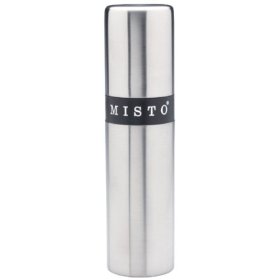
Seven years ago, my nephew, Global Man, gave this little tool to my sister for Christmas. I had never heard of it, and so he showed me how it worked. WOW.
We are firm believers in olive oil. And firm believers in food with less processing and chemical additives, rather than more.
He showed me you you put the oil in, maybe half a cup, and screw the top back on. How you pump the brushed aluminum cap up and down five or six times to achieve pressure inside, then just press the button and out comes a VAPOR of olive oil. The vapor is so fine, that I use it now for almost everything.
It took me a while. I was afraid the taste of olive oil would detract in some recipes, but the vapory film of oil laid down is so fine that it goes undetected in every but the very most refined recipes.
Instead of the spray cans you buy in the stores, full of chemical aerosols to make the oil spray, it uses air – imagine! And it allows you to use your very favorite olive oil all the time, so your cooking gets all the added benefits of olive oil, but so finely sprayed as to spare the calories.
I love this tool. It is available in better (walk-in) cooking stores, also from Amazon, and other mail order cooking supply stores. William Sonoma has one called QuickMist; looks like the same tool. I’d be lost without it.
More Chilis!
We just got back from Fehaheel, where we ate at the new Chili’s at the Al Manshar Mall. It’s always a debate – brave the traffic on Gulf Road to the Towers or brave the traffic going south to Fehaheel. Tonight we thought we would take a chance, see if the new Chili’s had opened there. We can always hit Paul’s at Al Kout as a fallback.
It was open! It’s only been open for a week, and they haven’t made any big announcements while they break in the new serving crew. The food was reliably good – we had the bottomless chips and salsa, and my husband had the Bacon Cheeseburger while I had the Chicken Ceasar – good. Quick, well served, and good.
The manager tells us another group of the Chili’s restaurants – Johnny Carino’s, Chili’s and (something else) will also be going into the Kuwait Magic Mall in 2007. Takes a little of the pressure off the Towers Chili’s.
The Rotana Hotel hasn’t opened at the Al Manshar Mall, nor has the Villa Moda, but the parking is already dismal. And the traffic in Fehaheel is nearing the same aggressiveness and gridlock as in Salmiyya. You CAN park across the busy road at Al Kout Mall and brave the crossing to Al Manshar with no cross walks or lights to help you.
Santa’s Wish List: Cookbooks
You might think I love to cook. You would be very wrong.
I had a great friend for many years, one of those Southern gals with a last name first name, and when one day I told her of my secret guilt – that cooking wasn’t FUN for me, she said “what we do, every day, is SURVIVAL cooking. We just meet the expectation of getting a meal on the table. That doesn’t have to be fun, it just has to be done.”
That’s pretty much what I do, and why I have been giving you all these great recipes. The truth about the recipes I am giving you is that most of them are EASY and they taste good. A few require special equipment and mastering a new skill, but it’s like swimming – once you’ve done it, it’s easy. There is nothing complicated about the recipes I am sharing with you – they are ones I use, too!
Books About Food and Eating
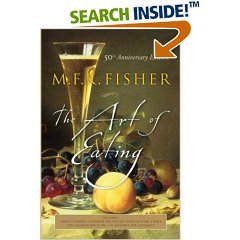
First I will share with you two books available through third party vendors at Amazon. The first is Food Lover’s Companion (A Comprehensive Definition of Over 4000 Food, Wine and Culinary Terms) by Sharon Tyler Herbst, which is available starting at $14.93, and the second is M.F.K Fisher’s The Art of Eating, also available through Amazon at $11.53. The Companion is invaluable when someone uses a term for a cooking technique or ingredient you don’t know; it has words for everything! My husband reads this book sometimes just for fun and is always sharing new information he has learned. The MFK Fisher book is just plain fun reading about food, full of information and anecdotes and stories, written in an enormously readable way.

Beginner Cookbooks
The first cookbook I used was the McCalls Cookbook – no longer in print. It had photos of how do do the things I found so intimidating, and that is where I got my earliers Christmas cookie recipes – the Russian Tea Cakes and the Candy Cane Cookies. The second was The Joy of Cooking, which I mentioned in an earlier blog entry. What is good about these books is that they keep it really simple. In Joy, they give you a long theoretical section, which you can read if you have the time, and which helps, but at the beginning it isn’t always easy to even understand the basics. That takes time. Then you can go back and read later and go “Aha! Now I understand!”
Cookbook Secrets
Actually, I love reading cookbooks. I have a huge collection. And almost all of them are Junior League Cookbooks. So here’s the secret – when you are looking for cookbooks, look for ones where women who contribute have to put their names. If their name is on the recipe, you can trust that the recipe will work, and that it will be one of their best recipes – they don’t want to be embarrassed!
The majority my cookbooks are from the South. And narrowing it down even further, most of my favorites come from Louisiana or Georgia.
The first one I ever bought was Talk About Good! And oh, it WAS good!
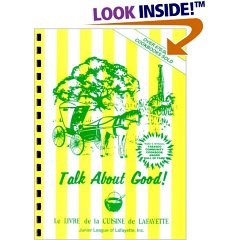
These recipes use ingredients like real cream and real butter and lots of salt. Southern people have some of the lowest life-expectancy rates in the United States – I suspect their eating habits have a lot to do with it. But if it isn’t a habit to eat so richly, every now and then it just tastes SO GOOD to use these ingredients. You will also notice that it has what they call a “plastic comb” binding. That means when you open it up to follow a recipe, it will lie flat. That’s a really good thing!
My second favorite is Quail Country, by the Junior League of Albany, Georgia. You would really have to scour the book stores to find this out-of-print classic, because so few people would ever want to part with it. Another gem is The Fort Leavenworth Collection, if you can get your hands on it – again, yard sales, used book stores would be your best bet.
There is a wonderful group of stores in the USA called Half Price Books. If books are not being bought as gifts, if you plan to just read a book and pass it along, or if you like to have a few on hand to pass along because you think they are so great, Half Price Books is a great place. They have the most obscure books, books you never thought you would see again. Many of their books are new, but remaindered (left over from book stores that couldn’t sell the, or from publishers who published too many copies) so they are sold at half price. They will also buy used books from you, but to me, they offer so little that I would just as soon give them away. (No, I don’t own stock in Half Price Books.)
There are some other fabulous Junior League cookbooks – the California Heritage Cookbook, the Seattle Classics, and there are other cookbooks produced by churches and charities that also have “real people” recipes that are drop-dead good. I remember once sharing a recipe for Chocolate Cheesecake from Seattle Classics. My friend told me she made it for Christmas dinner, but everyone was too full to eat dessert. But she said all night she heard doors opening and closing, as people snuck down to the kitchen to slice a little of the cheesecake and eat it, and in the morning, only a fragment was left!
Seeking out the best cookbooks can make every vacation an adventure. I have cookbooks from Kenya and Tunisia, Qatar, Jordan and Saudi Arabia . . . all full of great recipes, recipes with names attatched. I wish you a grand adventure seeking out cookbooks that will thrill your heart. Happy Hunting!
Recent Comments
intlxpatr on Yellowstone: Old Faithful to C… Michelle on Yellowstone: Old Faithful to C… Cathy on No Grown-Ups in Charge intlxpatr on Waiting for Snow intlxpatr on Waiting for Snow Wikipedia Donate Button

Amazina


Early Voting in Florida


 Here There and Everywhere