Drunk Drivers on the Road
Looks pretty dark blue from Pensacola across to Austin, all the way on I-10. Hmmm, used to be one of my favorite roads . . .


Drunk driving is always dangerous and a problem across the country and the world, but certain places have a knack for attracting drunk drivers. In the US, those places tend to be rural western states.
Avvo, a legal services company, crunched the National Highway Traffic Safety Administration’s road fatalities stats for an in-depth look at drunk driving across the country. The company sifted through the data and found that between 2004 and 2013 there were a total of 94,550 drunk driving deaths in the US. A deeper dive revealed which roads are the most dangerous for drivers.
The findings indicated that the most dangerous roads for drunk driving crashes tend to be in mountainous states out west. These roads cut through vast stretches of nearly empty territory to connect a few smaller towns and cities. There’s no one clear reason for the increase in drunk driving deaths in these states, but the study does offer some possibilities. The roads in question have high speed limits with few side streets, and in areas with little to no public transportation, increasing the likelihood of partiers driving home after a few too many. The study also says that the variable terrain and drivers unfamiliar with the winding roads and sudden weather shifts might contribute to the high rate of crashes.
Montana, Wyoming, New Mexico and South Dakota all top the list. Interstate 90 in Montana is the most dangerous road in America, with 6.4 drunk driving deaths per 100,000 people. However, Wyoming appears three times in the top ten, making it the most dangerous state. New Mexico and South Dakota also appear twice in the top ten. The only area in the top ten that isn’t a rural Western state is Washington DC, which often finds its way on to any list of worst car accidents, congestion and road deaths. To see more information about the deadliest roads in America check out the full study here.
10 Degrees Colder Than Juneau

We slept in this morning. It’s Thursday, the happiest day of my week, no water aerobics, no obligations, a day when I can plan, prepare and execute. It just gave me a laugh when I saw today’s temperatures, to see that we are colder than Alaska.
AdventureMan wrapped our lemon tree, and we dragged all our potted plants in near to the house, undercover but not inside. We thought we lost everything last January, when the same major temperature dip came – and stayed – but most of our things surprised us and struggled back, albeit a month or so later than usual. Note to Pensacola gardeners – don’t be in a hurry to dig out and toss after a hard frost, be patient. Your plants may be more resilient than you knew.
Another Reason to Love Weather Underground
Weather Underground is one of my daily stops; as I check today’s weather, I can, at a glance, see what the weather is doing in Kuwait, in Qatar, in Damascus, in Juneau, Alaska, in Seattle, in Denver – at a glance!
Last night we had a huge booming storm, all night. This morning, I clicked on the Weather Underground map with radar; you can see it at the local level, the regional level and the continental level. I wanted to see how much more booming we can expect before the clearing. Tomorrow is supposed to be cool – and sunny.
What a relief! The worst has passed, and there is nothing more headed our way! Clear as a bell!


All Time Stats Keep Me Humble

Wouldn’t I love to think that the most profound posts I write would garner the most attention and the most comments? But the truth is so humbling; the posts I write for fun, or in a hurry have long legs, or so WordPress tells me, and gather up statistics year after year.
I never know, when I write an article, what its future will be. It’s not unlike giving birth – you can input, but you have no control over who that child will be or where he/she will go.
God has the most wonderful sense of humor.
Domestic Violence: What is Wrong With this Picture?


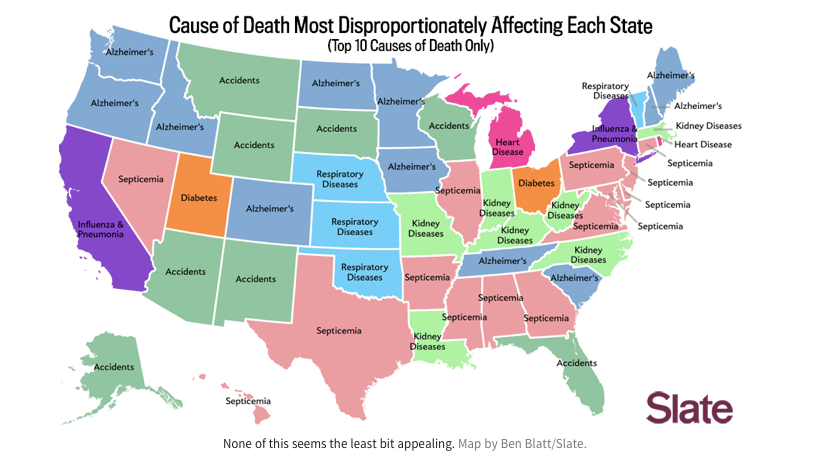
At first, I thought oh, that is amazing, Florida has the lowest rate of all the states. Then, I looked a little closer . . . no data? No data on homicides related to male partners?
Here is what the report summarizes:
The States Where Women Are Most Likely to Be Killed By Men
Every year, the Violence Policy Center tracks which states have the highest rate of incidents in which one man kills one woman, a typical indicator of domestic homicide. The Huffington Post crunched the data to find the worst offenders over the past decade. Between 2003 and 2012, Nevada had the highest rate, at 2.447 women killed per 100,000. In 2012, however, the most recent year for which data is available, Nevada’s rate dropped to 1.83, and Alaska took the top spot with 2.57 women killed per 100,000.
It is horrifying in Florida; men killing their wives, their live-ins, their daughters, men and women striking or burning their children, or shooting them . . . but it is also horrifying that Florida can’t – or won’t – provide the statistics when every other state has.
It all goes back to the idea of women as property. Arrrgh, I am speechless with frustration.

Putting Pensacola Weather in Perspective
I know, I know, you all are tired of hearing me gripe and groan about heat and humidity. I just had a humbling experience. I finished my Lectionary Readings and went to Weather Underground to see how the weather is shaping up for today and caught a glimpse of Kuwait weather. I have it marked as a favorite so I can see how my friends there are doing.
113°F in Kuwait City.
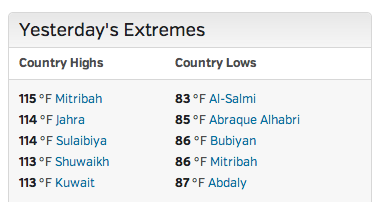
At the other extreme is my old hometown, Juneau, Alaska. This is the forecast for today, and the next week or so:

You know, today it’s supposed to be less than 90°F in Pensacola, and the humidity feels lighter today – so far. We are expecting a thunderstorm, and yesterday, the temperature dropped ten 15 degrees at noon as a thunderstorm rolled in – how cool is that? We have those beautiful white sand beaches and a surf as warm as bathwater – 84°F – Pensacola in the heat of August is looking a lot better 🙂
Review Prompts Sharp Increase in Saudi Arabia MERS Cases
Saudi Arabia Review Finds Higher Number Of MERS Cases
 | By ADAM SCHRECK
DUBAI, United Arab Emirates (AP) — Saudi Arabia, which is grappling to contain the spread of a frequently deadly respiratory virus, announced Tuesday that a review of the illness led authorities to sharply revise upward the number of confirmed infections and deaths from the disease.
The surprise disclosure followed the unexpected firing of the kingdom’s deputy health minister, heightening concerns about the country’s ability to halt the spread of the Middle Eastern respiratory virus. He was the second senior Saudi health official to lose his job in less than two months.
A report by the official Saudi Press Agency said authorities have registered a total of 688 confirmed infections and 282 deaths as a result of MERS since the virus was first identified in 2012. Of those infected, 53 were reported to still be receiving treatment.
The Saudi Health Ministry’s most recent tally of cases listed 575 cases and 190 deaths, meaning that over 100 cases had previously gone unreported.
MERS belongs to a family of viruses known as coronaviruses that include both the common cold and SARS, or severe acute respiratory syndrome, which killed some 800 people in a global outbreak in 2003. MERS often starts with flu-like symptoms but can lead to pneumonia, breathing problems and in severe cases, kidney failure and death.
Dr. Tariq Madany, who heads the country’s medical advisory council, said the revised toll was the result of a “full review” of previous cases undertaken to better understand the virus’ spread.
“The ministry is committed to providing all the data concerning the coronavirus and putting polices in place to protect public health,” the agency quoted Madany as saying. “Though the review showed confirmed cases that needed to be added, we are still witnessing a decline in the number of newly registered cases in the past few weeks.”
Acting Health Minister Adel Faqih on Monday issued an order removing his deputy, Ziad Memish, according to a brief statement on the ministry’s website. It did not give a reason for the move.
King Abdullah sacked the previous health minister in April following a spike in reported infections.
Not everyone who contracts the virus that causes MERS gets sick, while others show only mild symptoms before they recover. There is no commercially available vaccine.
Saudi Arabia has been the epicenter for the disease. The virus has since spread to other parts of the world, including the wider Middle East, and parts of Europe, Asia and the United States.
Scientists believe camels may play a role in primary infections but are unsure exactly how the disease spreads to humans. The disease can spread between people, but typically only if they are in close contact with one another. Many of those infected have been health care workers.
The World Health Organization last month said MERS does not yet constitute a global health emergency despite a recent spike in infections, though it continues to monitor the spread of the virus.
___
Associated Press writer Ahmed Hammad in Cairo contributed to this report.
Recent Comments
intlxpatr on Shampoo Ginger tigerbutterya0c5ff1d… on Shampoo Ginger intlxpatr on British Soldier Kidnapped, Esc… John on British Soldier Kidnapped, Esc… intlxpatr on British Soldier Kidnapped, Esc… Wikipedia Donate Button

Amazina


Early Voting in Florida


